Sourdough Bread Flour Fermented Miracle from the Bakery
Sourdough Bread Flour: The Fermented Miracle from the Bakery
It all begins with the quiet meeting of a bit of flour and water. Bread has been on our tables for thousands of years, but today we are rediscovering it. The dizzying pace of modern life has worn us out a bit, I suppose; that's why we are returning to the scent of that old, patient sourdough. The crisp sound of a freshly baked loaf doesn't just fill our stomachs; it seems to nourish our souls as well. Of course, there is an "art" to it, that's true; but to practise that art, the ingredients you have at your disposal must not let you down halfway. At Özmen Un, we don't just view this process as flour production. In this article, we will focus a little on the technique but mostly on the spirit of the craft, from that first yeast in your kitchen to that final moment in the oven.
What is Sourdough Bread Flour? Why is Special Flour Needed?
The most fundamental thing that sets sourdough bread apart from others is actually patience. You can make bread in two hours with those quick starters you buy from the supermarket, but sourdough isn't like that; it takes days to nurture, wait, and mature. It is precisely at this point that the flour ceases to be just a filler in the dough and becomes the home and food for those precious bacteria and beneficial fungi. If you ask what sourdough is, it is the hidden energy within the flour awakening with water and embracing the life around it. However, for the dough not to give up in this long marathon and resist that acidity, the "genetics and equipment" of the flour must be truly strong.
The most fundamental difference between ordinary flour and flour suitable for sourdough lies in the quality of the protein and the resilience of the gluten network. Sourdough is acidic by nature. As the dough ferments, i.e. rises, this acidity increases and begins to slowly break down the gluten structure of weak flours. If the flour used is low in protein or made from weak wheat, the dough will eventually lose its carrying capacity, spread out, and fail to form the desired porous structure. Sourdough bread flour, on the other hand, maintains its form even in this acidic environment thanks to its high-quality protein content, trapping the carbon dioxide gas produced by the yeast like a strong net. In Özmen Un's production processes, which combine technology with tradition, we preserve the purest form of wheat to ensure the flour exhibits this resistance. Thus, the dough entering the oven reflects the energy within it as a tremendous increase in volume, achieving that famous oven spring.
In addition, the water absorption capacity of flour plays a vital role in fermented bread production. High-quality bread flour can absorb far more water than its own weight. Dough with a high water content becomes much softer and moister inside during baking due to the effect of steam. Our flours, with their carefully controlled starch damage, trap water within the dough, extending the bread's shelf life while also bringing out the unique aromatic profile of local wheat varieties. In this process, the flour's naturalness, lack of additives, and unaltered structure from industrial processing are our top priorities for preserving the natural flora of the sourdough starter.
Professional Tips for Making Sourdough Bread
Making perfect sourdough bread requires understanding the language of flour and water. For many home bakers, the biggest challenge is achieving consistent results even when following recipes faithfully. At this point, correctly analysing the character of the flour and the needs of the dough will elevate you from standard results to masterful work. For example, although the autolysis stage often seems like a waste of time, it is actually a miraculous moment when the proteins in the flour fully meet the water and begin to form gluten bonds effortlessly. This short wait before mixing the flour and water and adding the yeast will increase the elasticity of your dough and make kneading much easier.
Of course, there is also the issue of temperature, which is the invisible hero of the process. Dough reacts very quickly to the temperature around it. A very hot kitchen tires the dough prematurely, while a very cold one discourages the yeast. To maximise the performance of the flour you use, the dough temperature must be kept at a certain balance. In a very hot environment, the enzymes in the flour can work too quickly, causing the dough to collapse prematurely; in a very cold environment, the yeast becomes sluggish and the flour's powerful structure never activates. Therefore, adjusting the temperature of your water according to seasonal conditions helps you to release the potential of the flour in a controlled manner.
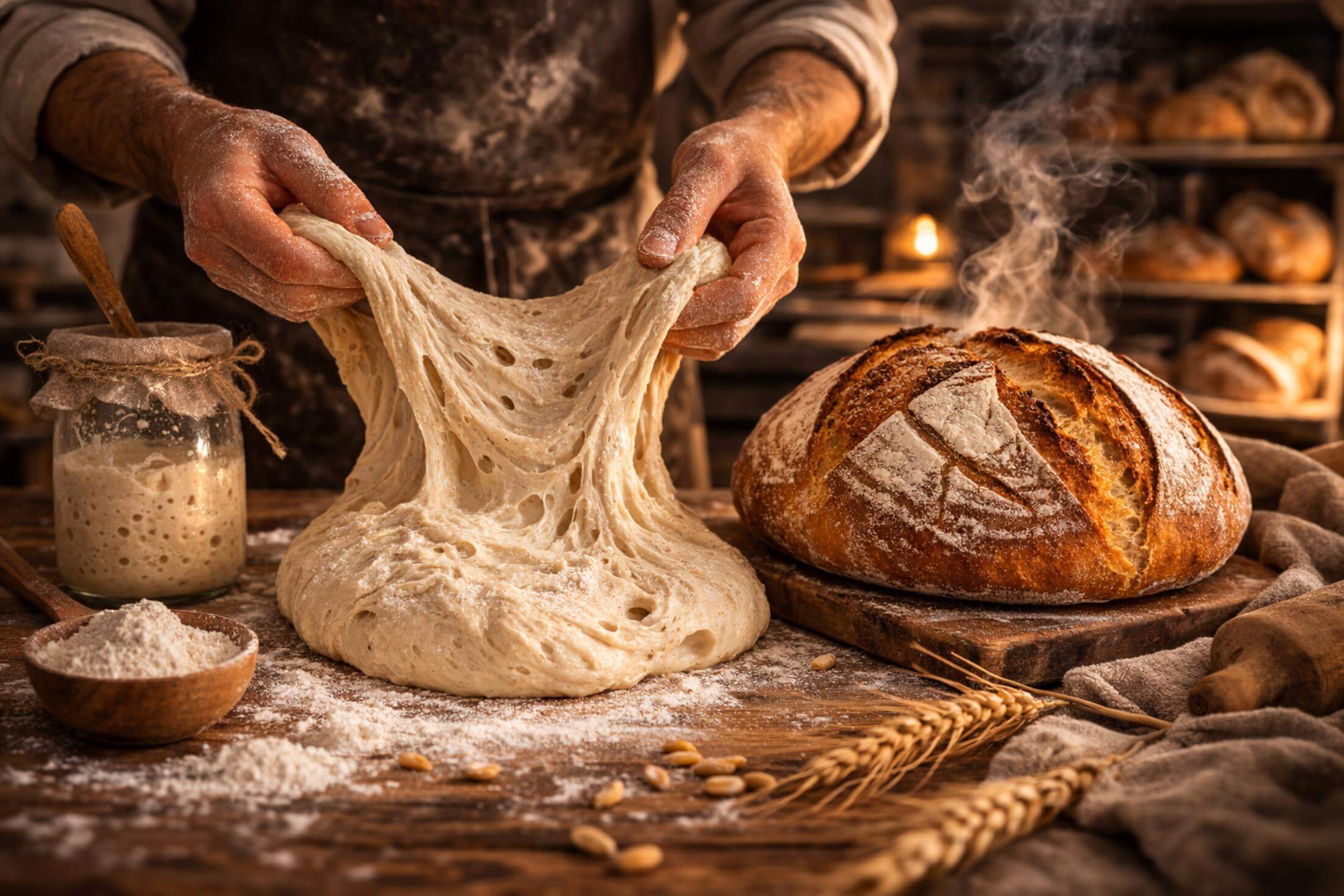
Another important point is the physical interventions applied to the dough. Kneading the dough vigorously or over-kneading it, as in traditional methods, can destroy the characteristic large-pored structure of sourdough bread. Instead, using gentle folding techniques strengthens the gluten network provided by the flour in layers. The air trapped in the dough during each fold expands during baking, creating those magnificent voids in the bread's internal structure. The higher the quality of your flour, the more you can feel with your hands how the dough gradually strengthens during these folding processes, stretching like a spring. In the final stage, patience comes into play; the cold fermentation process allows the sugars in the flour to caramelise, giving the bread crust its appetising dark colour and deep aroma.
Step-by-Step Beginner's Guide: Sourdough Bread Recipe with Özmen Un
If you aim to achieve professional bakery performance in your own kitchen, you should proceed by savoring every stage of the process rather than rushing through it. The process of making sourdough bread demands total concentration, from the very first meeting of flour and water to the moment a hot loaf emerges from the oven. For the first step, place approximately five hundred grams of Özmen Un "Flamura - Sourdough Flour" a high-protein variety specifically crafted for sourdough—into a large mixing bowl.
Add approximately three hundred and fifty grams of room temperature drinking water and mix until every grain of flour is moistened. At this point, do not knead the dough, just bring it together, cover it, and leave it alone for about an hour. This autolysis process allows the flour to fully absorb the water and the dough to become soft and ready for kneading.
Once the time is up, add approximately 100 grams of your pre-fed sourdough starter, at its most active point, to the dough. As you work the starter into the dough with your fingertips, you can observe how the flour combines with the starter and the structure begins to change. After resting for about half an hour, add 10 grams of salt dissolved in a small amount of water. Now gather the dough from the sides of the bowl towards the centre, kneading it gently but confidently for a few minutes. Your dough is now ready to move on to the bulk fermentation stage. At this stage, every half hour, lift the dough from all sides and fold it over itself. Repeating this process four times in total will allow the gluten structure provided by the flour to rise like columns.
When your dough has risen noticeably in about four to five hours and formed tiny air bubbles on the surface, it is time to shape it. Gently tip the dough onto a lightly floured work surface; taking care not to deflate it, fold it from the outside inwards and shape it into a taut, round form. Place the shaped dough in a well-floured proofing basket or a deep bowl lined with a clean cloth. From this point on, the most critical phase of patience begins: place the dough in the refrigerator and leave it to cold ferment for at least twelve hours. This long wait allows the starch in the flour to break down, making it easier to digest and deepening the bread's famous aromatic profile.
When baking day arrives, preheat your oven to the highest possible temperature (usually two hundred and fifty degrees) and, if you have one, heat your cast iron pot inside. Take the cold dough straight from the refrigerator and place it directly into the hot pot or baking tray. Make a deep cut on top with a sharp knife; this cut acts as a guide, determining which direction the dough will expand as it bakes. Creating steam in the oven for the first twenty minutes, or keeping the lid on the cast iron pot, prevents the outer surface of the flour from drying out immediately, allowing the bread to rise to its maximum potential. Then, reduce the heat slightly, open the lid, and wait for the crust to turn that golden brown colour. Waiting at least an hour before slicing the bread after removing it from the oven allows the magnificent internal texture created by the flour and water to settle and the flavour to fully develop.