How to Choose the Right Flour for Baklava?
The Secret of Baklava: How to Choose the Right Flour for Baklava?
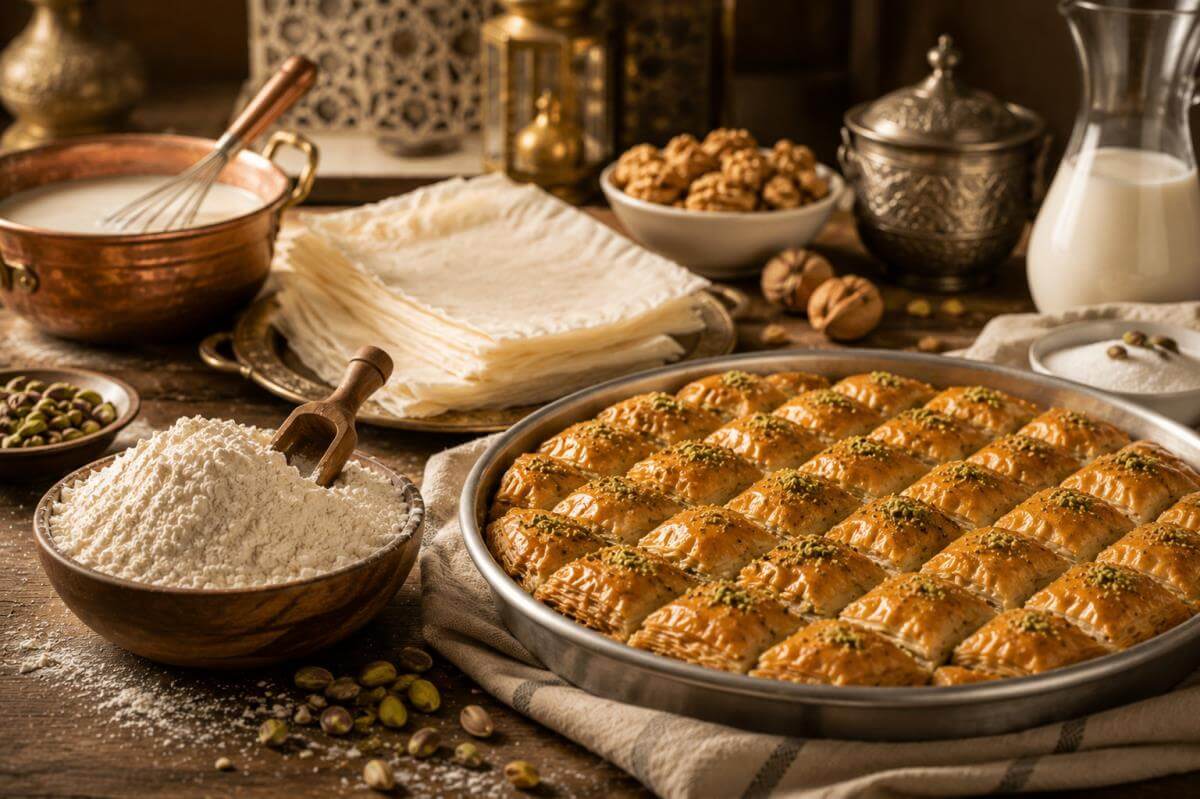
The pinnacle of our traditional cuisine, the excitement of festival mornings, baklava... In fact, baklava is not just a dessert; it is the love affair between patience, manual labour and the right ingredients. You can tell a good baklava the moment it comes out of the oven by its colour. If it even makes that famous "crunch" sound when you touch it with a fork and melts in your mouth with a silky texture, you know it's perfect. But don't forget, this perfection doesn't come just from plenty of pistachios or high-quality butter. The real hero of baklava is the flour, which shoulders the entire burden while still in the dough stage, allowing you to roll it out like a sheet. At Özmen Un, we know the silent but mighty power of flour in the kitchen; now let's uncover the secrets of this craft together like a master.
The Secret to Baklava's Crispiness: Why Is the Right Flour So Important?
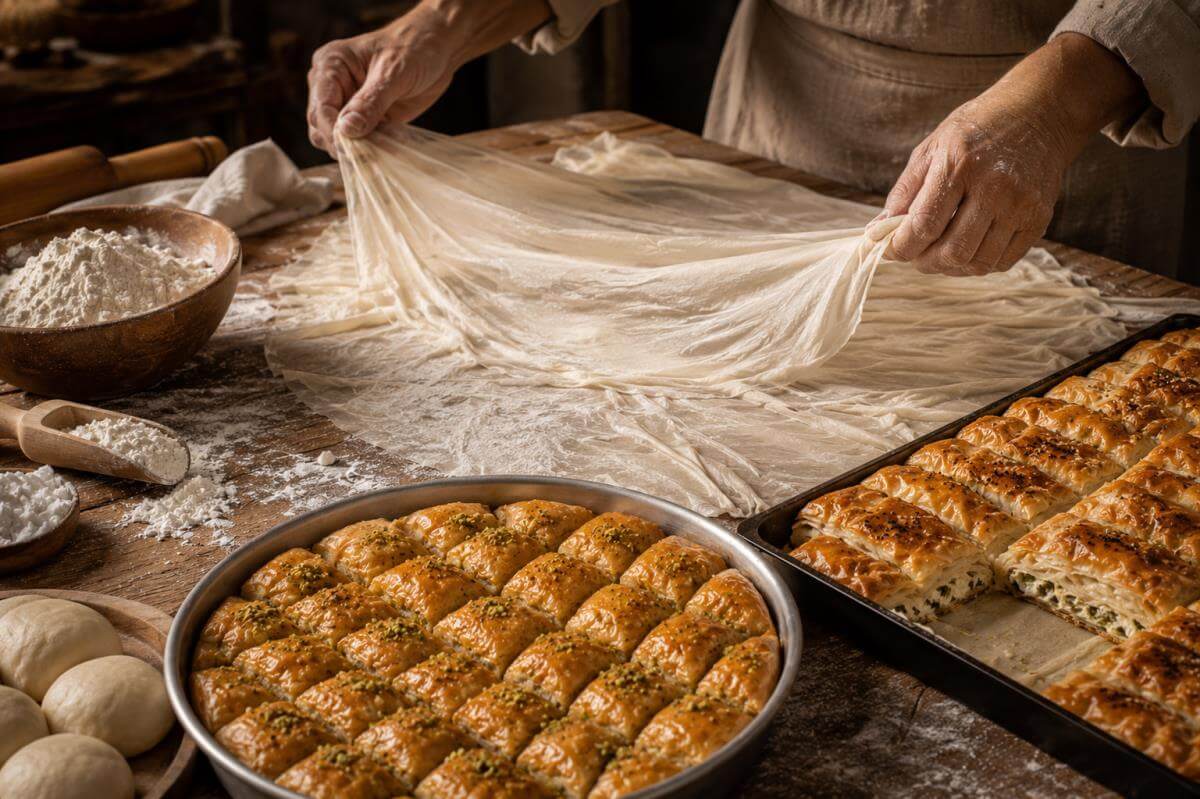
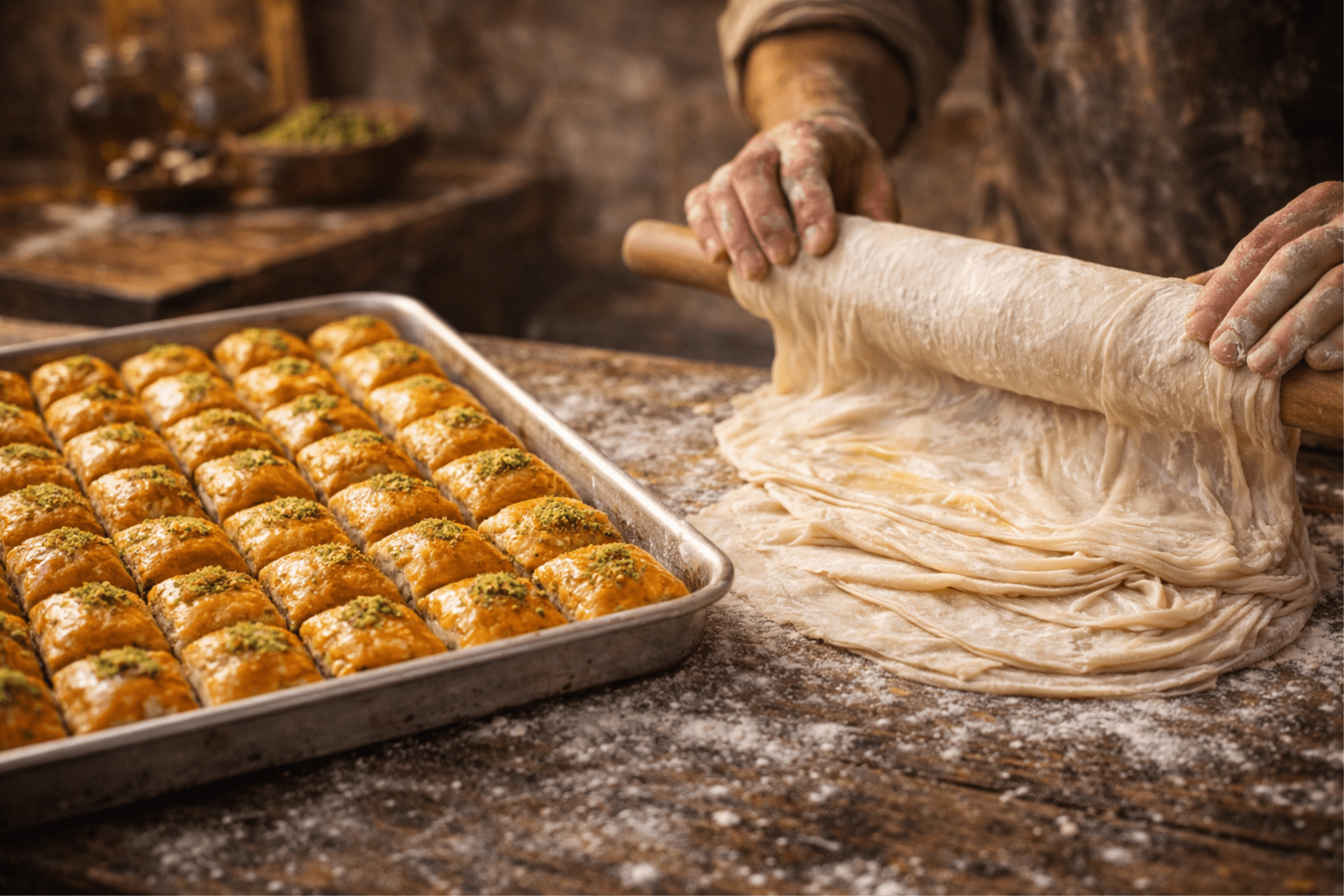
Unlike other processes in the kitchen, making baklava is an action where physical strength and precision meet at their most extreme points. We're talking about a structure where dozens of layers of dough are stacked on top of each other, each layer so thin that light can pass through it. This is where the importance of the flour used for baklava dough becomes crucial. If you try to roll out baklava with ordinary flour, you will see that the dough tears instead of stretching, or dries out and crumbles shortly after being rolled out. However, the right flour for baklava, thanks to its high-quality gluten, stretches the dough like chewing gum, telling you, "I'm here."
That famous crunch? It comes from each layer drying out individually in the oven. If your flour is weak, those layers will stick together, and you'll end up with a heavy dessert that's doughy inside. Choosing the right flour allows the dough to spread a little more with each stroke of the rolling pin, but never to break or tear. Moreover, quality flour is not just a binding agent; it balances the density of the syrup and extends the life of the dessert. Every touch in the baklava-making process draws a success graph directly proportional to the quality of the flour.
What Should an Ideal Baklava Flour Be Like? What Are Its Characteristics?
The technical characteristics of the flour selected for perfect baklava are much more stringent than those for ordinary bread or pastry flour. For a flour to achieve baklava status, it must first have a very low ash content and high protein quality. Ash content is the most important factor determining the purity and colour of the flour. For the baklava dough to be pure white before baking and shiny and clear after baking, the flour must be very well sifted and completely free of bran. The flours processed down to the finest detail in Özmen Un's technological facilities guarantee this clarity in every loaf and tray.
There is also this: the gluten in the flour must be both elastic and resistant. It is not enough for the protein content to be high; it must be soft enough not to tire you when rolling out the dough, but also robust enough to retain its shape after rolling. The ideal flour absorbs water gently. This ensures that the dough remains the same consistency throughout when kneading. It is also the technical structure of the flour that distributes the butter evenly across each layer during baking. This is where the expertise of professional baklava-making lies.
Tips for Choosing the Best Flour for Rolling Out Baklava Dough
A master rolling out baklava in the kitchen's biggest headache is the dough under the rolling pin. The dough should respond to you, saying, "go ahead." When choosing flour for baklava, it is not enough to just look at the brand; you need to know what type of wheat the flour is blended from. Flours derived from the essence of hard wheat give the dough the steel-like strength it needs. The use of starch is equally critical; if your flour is too dry, it cannot hold the starch, and when rolled out, it becomes lumpy and crumbly ( ), which is frustrating.
Another secret of master bakers is the fermentation tolerance of the flour. While the dough is resting, the structure of the flour should not break down; on the contrary, the gluten networks within it should relax further. When the right flour is chosen, the dough becomes much easier to roll out as it rests, and with each movement of the rolling pin, it gets one step closer to paper thinness. If you are making baklava at home and your dough keeps springing back, this is probably due to the low gluten quality of the flour or the wrong choice of flour. To ensure your efforts are not wasted on this laborious journey, it is best to rely on professional flours that are controlled at every stage, from the genetics of the wheat in the field to its arrival on the table.
Capture the Traditional Flavour of Baklava with Özmen Un
At Özmen Un, we offer a wide range of baklava flours tailored to different needs, aiming to carry this unique Anatolian heritage into the future. Each of our products has been meticulously developed in our R&D centres to meet different technical requirements. For example, Baklava Flour Super Hışır, developed for our masters who want to achieve the highest level of that famous crispiness in their desserts, stands out with its high elasticity and unique baking characteristics.
For those pursuing more sophisticated and traditional flavours, Baklava Flour Zivago and our special blend, Baklava Flour Özmen Özel, are indispensable for professionals due to the silky texture they impart to the dough. For those who want to capture the unique flavour standard of Gaziantep, the capital of baklava, we have produced Baklava Flour Antep Flour, a special selection that reflects the wheat character of the region. This diversity is the clearest indication of the great respect Özmen Un has for every professional touch.
Flour and Dough Tips for Professional Baklava at Home
Even if you start working with the best baklava flour at home, there are some small but critical details that determine the success of the process. First of all, be sure to sift your flour before use to aerate it and prevent clumping. During the kneading stage, ensuring your water is at room temperature and even adding a little lemon juice or vinegar makes the gluten structure in the flour more flexible, making the rolling process easier. After kneading your dough, allowing it to rest for at least one to two hours gives the proteins in the flour time to fully absorb the water and allows the dough to "come together".
Using only starch (preferably a mixture of corn or wheat starch) instead of flour during the rolling process prevents the layers from sticking together while preparing the ground for the crispiness of the strong base provided by the flour. During the syruping stage, you will see that high-quality flour does not become doughy when absorbing the syrup; instead, it traps the syrup inside and remains firm. This is why choosing the right flour for baklava is a decision that has an impact right up to the very last moment. If you want to transform this traditional delicacy into a work of art, you can make a difference in your kitchen by discovering Özmen Un's artisan and master series. Remember, the most delicious baklava begins with the first step: choosing the right flour.