10 Practical Recipes with All-Purpose Flour
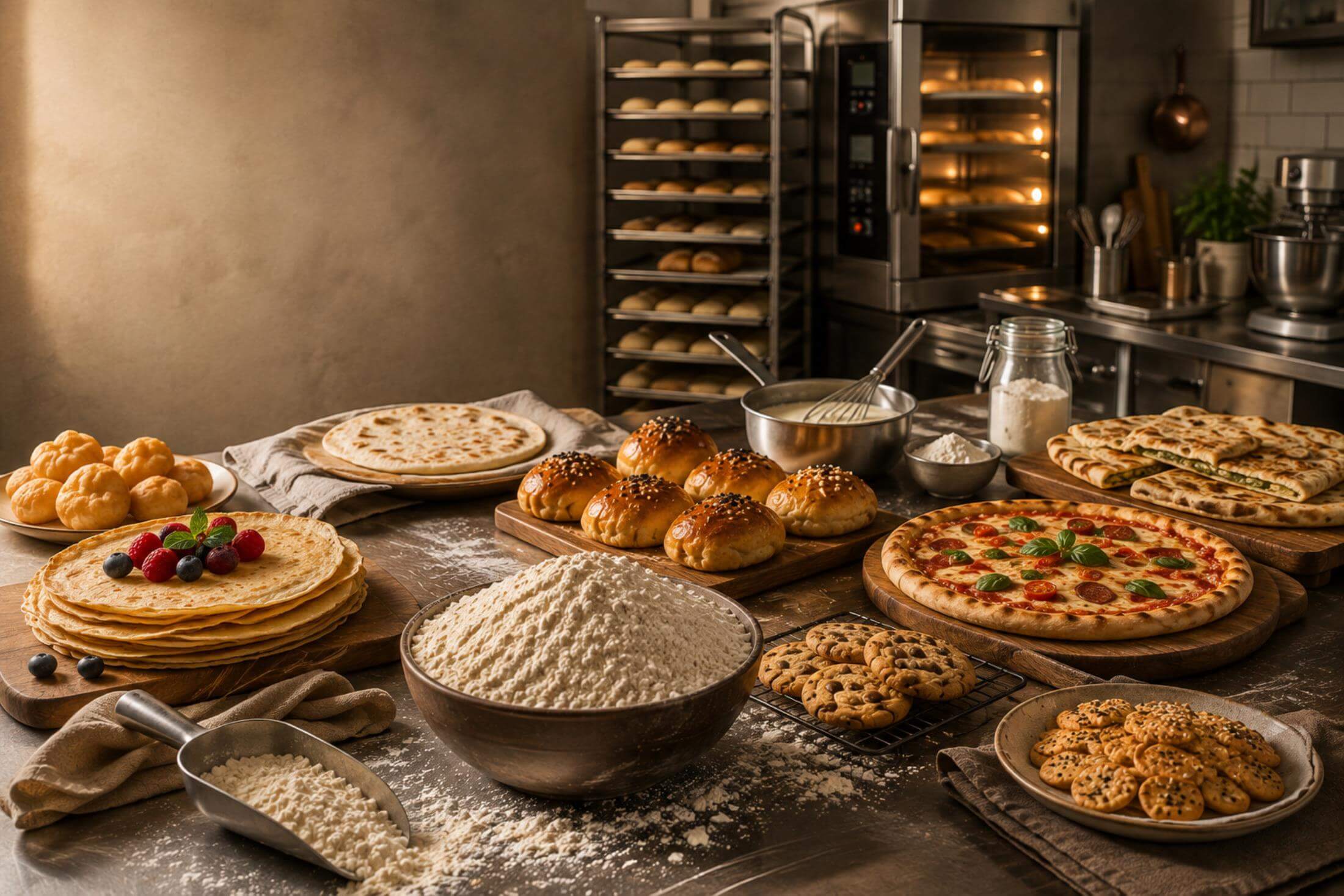
The most valuable ingredient in a kitchen is not always the most unusual one. Sometimes it is the ingredient that solves the greatest number of everyday needs. All-purpose flour is exactly that kind of staple. It can become breakfast crepes, quick flatbread, cookies, poğaça, béchamel sauce, or a simple pizza base without requiring a separate bag for every recipe.
Its versatility comes from balance. All-purpose flour usually offers enough protein to create structure, but not so much that every product becomes chewy. It cannot replace specialty flour in every situation—baklava, long-fermented pizza, artisan bread, and croissant may perform better with flour designed for the task—but it is an efficient foundation for daily cooking.
Practical Recipes to Make with All-Purpose Flour
Quick Checklist
Breakfast: crepes, pancakes, fried dough, and pan-cooked bazlama.
Tea time: poğaça, cookies, and savory crackers.
Main meals: gözleme, mini pizza, and quick pide.
Sauces: béchamel and soup thickening.
Add flour gradually and judge the texture of each dough or batter.
Before moving to the recipes, remember one principle: a cup of flour is not always identical. Measuring by weight creates more consistent results. When using cups, loosen the flour, spoon it into the cup, and level it rather than packing it tightly.
What Is All-Purpose Flour?
All-purpose flour is milled to perform across a broad range of recipes. It sits between strong bread flour and low-protein cake flour. This balance makes it useful for home kitchens that need flexibility.
It works well in batters, soft yeast doughs, cookies, sauces, and simple flatbreads. The exact protein and absorption vary by brand, so liquid should still be adjusted according to texture.
All-purpose flour is not a promise that every recipe will be perfect. Very delicate cake may benefit from pastry flour, while high-hydration bread may need stronger flour. Use it where balanced performance is more important than extreme specialization.
1. Thin Breakfast Crepes
Crepes need a smooth, flowing batter that spreads quickly in the pan.
Ingredients: all-purpose flour, eggs, milk, water, salt, and a small amount of oil or melted butter.
Whisk the eggs and liquid, then add flour gradually. Rest the batter for 15 to 30 minutes so the flour hydrates and bubbles settle. If it thickens, add a little water or milk.
Cook in a lightly greased hot pan. Fill with cheese and herbs, yogurt, fruit, or a moderate amount of jam.
Tip: The first crepe often tests the pan temperature and batter thickness. Adjust after observing it.
2. Fluffy Pancakes
Pancakes rely on chemical leavening and should be mixed gently.
Combine all-purpose flour, baking powder, a small amount of sugar and salt. In another bowl, mix egg, milk, and melted butter. Bring the two together only until no dry pockets remain.
Let the batter rest briefly, then cook small portions over medium heat. Turn when bubbles appear and the edges begin to set.
Tip: Overmixing develops gluten and creates rubbery pancakes.
3. Quick Pan Bazlama
Traditional bazlama is a soft Turkish flatbread. A quick home version can be made with yeast or a faster yogurt-and-baking-powder method.
For the yeast version, combine flour, warm water or milk, yeast, salt, and a little oil. Knead to a soft dough, ferment until expanded, divide, rest, and cook on a preheated pan.
Tip: Keep the dough soft. Excess flour produces dry flatbread.
4. Soft Poğaça
All-purpose flour can produce soft poğaça when the dough contains balanced liquid, fat, and fermentation.
Mix warm milk, yeast, egg, yogurt or oil, salt, and a small amount of sugar. Add flour gradually and knead until smooth. Allow bulk fermentation, shape with cheese or olive filling, then proof again on the tray.
Bake in a fully preheated oven until evenly golden.
Tip: Do not make the dough firm simply because it feels slightly sticky at first.
5. Simple Savory Cookies
Savory cookies are ideal for tea time and can be flavored with cheese, herbs, sesame, or nigella seeds.
Cream or mix butter with oil, yogurt, egg, salt, and seasoning. Add flour and baking powder gradually until a soft, shapeable dough forms. Avoid long kneading.
Shape, brush with egg wash if desired, add seeds, and bake until the edges color.
Tip: Too much flour makes the cookies dry and hard after cooling.
6. Thin Savory Crackers
Combine all-purpose flour with olive oil, water, salt, and seeds. Roll the dough very thin between sheets of baking paper, score into pieces, and prick the surface.
Bake until fully dry and crisp. Allow the crackers to cool on the tray or a rack before storing.
Tip: Uneven thickness creates some burnt pieces and some soft pieces. Roll as evenly as possible.
7. Gözleme
Gözleme is a thin Turkish flatbread cooked on a griddle with fillings such as cheese and herbs, potato, spinach, or minced meat.
Prepare a dough with flour, water, salt, and optional oil. Knead until smooth and rest well. Divide into portions, roll thinly, add a cool and relatively dry filling, fold, and cook on a hot surface.
Tip: Wet filling makes the dough difficult to seal and can leave the center gummy.
8. Mini Pizza
For a quick mini pizza, use a soft yeast dough made with all-purpose flour, water, yeast, salt, sugar, and olive oil.
Ferment until the dough expands, divide, rest, and shape. Add a thin layer of sauce and moderate toppings. Bake on a hot tray or stone.
All-purpose flour works for same-day pizza, but a long fermentation or high-hydration style may perform better with dedicated pizza flour.
Tip: Too much topping prevents the center from baking properly.
9. Quick Pide
Pide dough should be soft and extensible. Mix all-purpose flour with yeast, water, salt, and a little oil. Ferment, divide, and rest before opening into oval shapes.
Fill with cheese, minced meat, vegetables, or egg according to the style. Fold the edges inward and bake at high heat.
Tip: Resting the divided dough makes shaping easier and reduces shrinkage.
10. Béchamel Sauce
All-purpose flour is also useful beyond dough. Béchamel begins with a roux of butter and flour.
Melt butter, add flour, and cook briefly without darkening. Add warm milk gradually while whisking. Simmer until smooth and season with salt, pepper, and nutmeg.
Use it in lasagna, baked vegetables, gratins, and croquettes.
Tip: Cooking the flour in butter removes raw flavor, while gradual milk addition prevents lumps.
|
Recipe |
Desired Flour Behavior |
Key Technique |
|
Crepes |
Smooth, fluid batter |
Rest and adjust with liquid |
|
Pancakes |
Tender, aerated batter |
Mix minimally |
|
Bazlama |
Soft, elastic dough |
Keep hydration high enough |
|
Poğaça |
Balanced fermentation strength |
Add flour gradually and proof twice |
|
Cookies |
Short, tender dough |
Avoid overmixing |
|
Crackers |
Thin, crisp structure |
Roll evenly and bake dry |
|
Gözleme |
Rollable dough |
Rest before opening |
|
Mini pizza |
Moderate elasticity |
Use hot baking surface |
|
Pide |
Soft extensibility |
Rest divided dough |
|
Béchamel |
Smooth thickening |
Cook roux and add milk gradually |
How to Adjust All-Purpose Flour in Different Recipes
Batters
Crepe and pancake batters should be mixed until smooth or just combined, depending on the product. Resting changes thickness, so adjust liquid after the rest.
Yeast Doughs
Poğaça, pizza, pide, and bazlama need enough kneading to develop gluten. The dough should become smooth and elastic, but remain soft.
Short Doughs
Cookies, crackers, and tart-like doughs should not be kneaded excessively. Fat and limited water help control gluten.
Sauces
For roux-based sauces, flour must be cooked in fat before liquid is added. The ratio determines thickness.
When Should Specialty Flour Be Used Instead?
All-purpose flour is practical, but certain products have demanding technical needs.
Use bread flour for high-volume loaves, bagels, or long fermentation. Use pizza flour for high hydration and extended fermentation. Use baklava flour for paper-thin opening. Use cake or pastry flour for extremely tender crumb. Use whole wheat flour when a fuller grain structure is intended.
Knowing when all-purpose flour is enough and when specialty flour creates a meaningful improvement is part of efficient kitchen planning.
Common Mistakes with All-Purpose Flour
Measuring Too Much
Packed cups can add significantly more flour than intended. Weigh whenever possible.
Adding Flour Before Hydration Is Complete
Dough often becomes less sticky after resting. Wait before correcting.
Mixing Every Recipe the Same Way
Bread needs gluten development; cake and cookies need restraint. Technique must match the product.
Ignoring Ingredient Temperature
Cold eggs, milk, or butter can slow yeast dough. Warm fat can ruin cookie texture. Follow the needs of the recipe.
Storing Flour Poorly
Humidity, heat, and odors affect flavor and performance. Keep opened flour in an airtight container in a cool, dry place.
A Practical Pantry Strategy
Keep all-purpose flour as the main daily flour if you frequently cook varied recipes. Add smaller packages of bread, pizza, whole wheat, or baklava flour according to your habits.
Label containers and apply FIFO. Do not pour new flour onto old residue without cleaning the container. Buy quantities you can use while the product remains fresh.
Özmen Un offers multipurpose and application-specific flour options, helping home cooks build a pantry that is flexible without treating every flour as identical.
One Flour, Many Possibilities
The value of all-purpose flour lies in its ability to move between breakfast, tea time, dinner, and sauces. With the correct method, it can create thin crepes, soft poğaça, crisp crackers, and smooth béchamel.
Reliable results still depend on observation. Add flour gradually, rest dough when needed, mix according to the desired texture, and use strong heat where the product requires it. The flour is versatile; the technique gives it direction.
|
Explore Özmen Un all-purpose flour for practical everyday recipes and consistent home baking. |
Frequently Asked Questions About All-Purpose Flour
Can all-purpose flour be used for bread?
Yes, especially for simple same-day loaves. High-hydration, long-fermented, or high-volume bread may perform better with stronger bread flour.
Can all-purpose flour be used for cake?
Yes, but mix minimally after adding flour. For very delicate sponge or layer cake, lower-protein cake or pastry flour may create a softer crumb.
Why does dough become hard when using all-purpose flour?
The usual causes are too much flour, low hydration, excessive mixing, insufficient resting, or overbaking. Add flour gradually and judge the dough rather than forcing it to become dry.
How should all-purpose flour be stored?
Keep it in a cool, dry, dark place. After opening, use a clean airtight container and protect it from humidity, odors, heat, a