Supply Chain and Quality in Bulk Flour Purchasing
For a professional business, flour is not simply another ingredient entering the warehouse. It determines the morning bread of a bakery, the fermentation rhythm of a pizzeria, the layers of a baklava producer, and the efficiency of an industrial line. A delay, an inconsistent batch, or a product selected for the wrong application can affect production schedules, labor, waste, customer satisfaction, and brand reputation.
The value of a bag or a silo load cannot therefore be measured only by its price per kilogram. Flour must behave consistently from delivery to delivery, support the established recipe, work with existing equipment, and arrive according to the production plan. At Özmen Un, professional flour supply is viewed as more than product delivery: it is a partnership that matches the right product with the right operation at the right time.
Matching Flour to the Product in Industrial Production
Quick Checklist
Bread: volume, gas retention, fermentation tolerance, crust, and crumb.
Pizza: elasticity, extensibility, water absorption, and holding time.
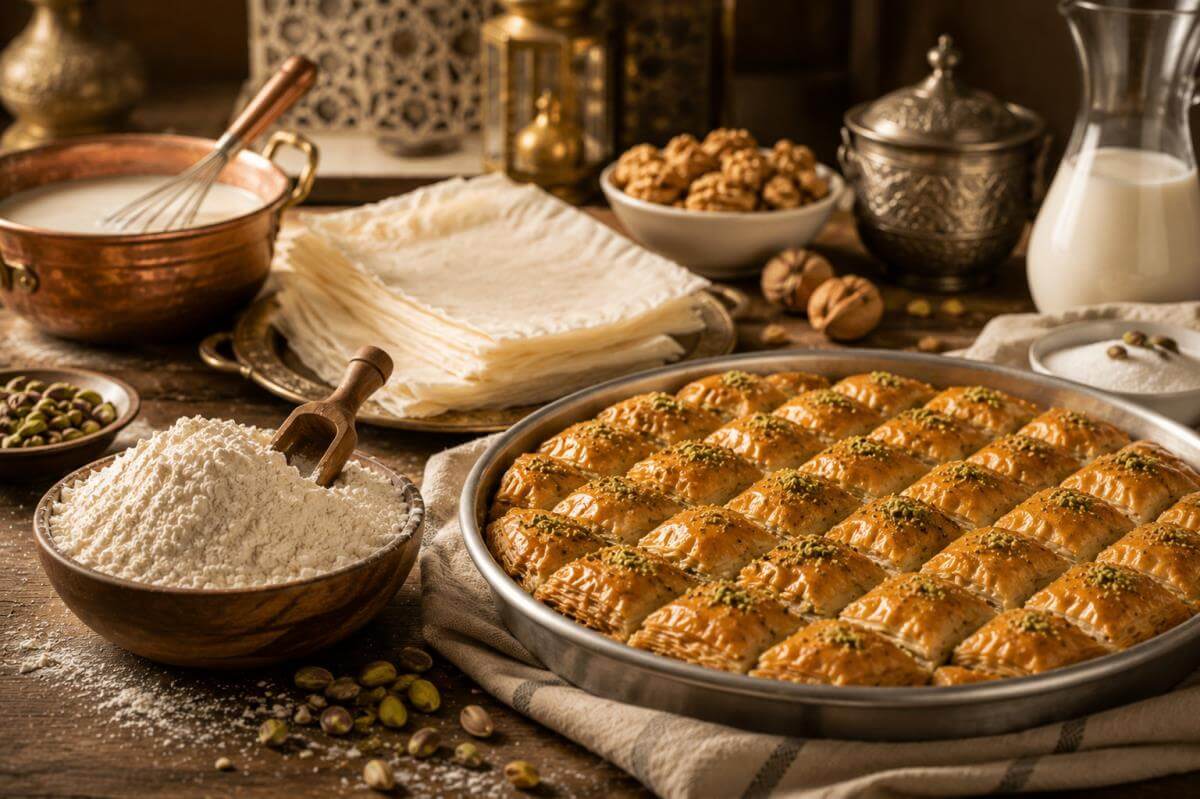
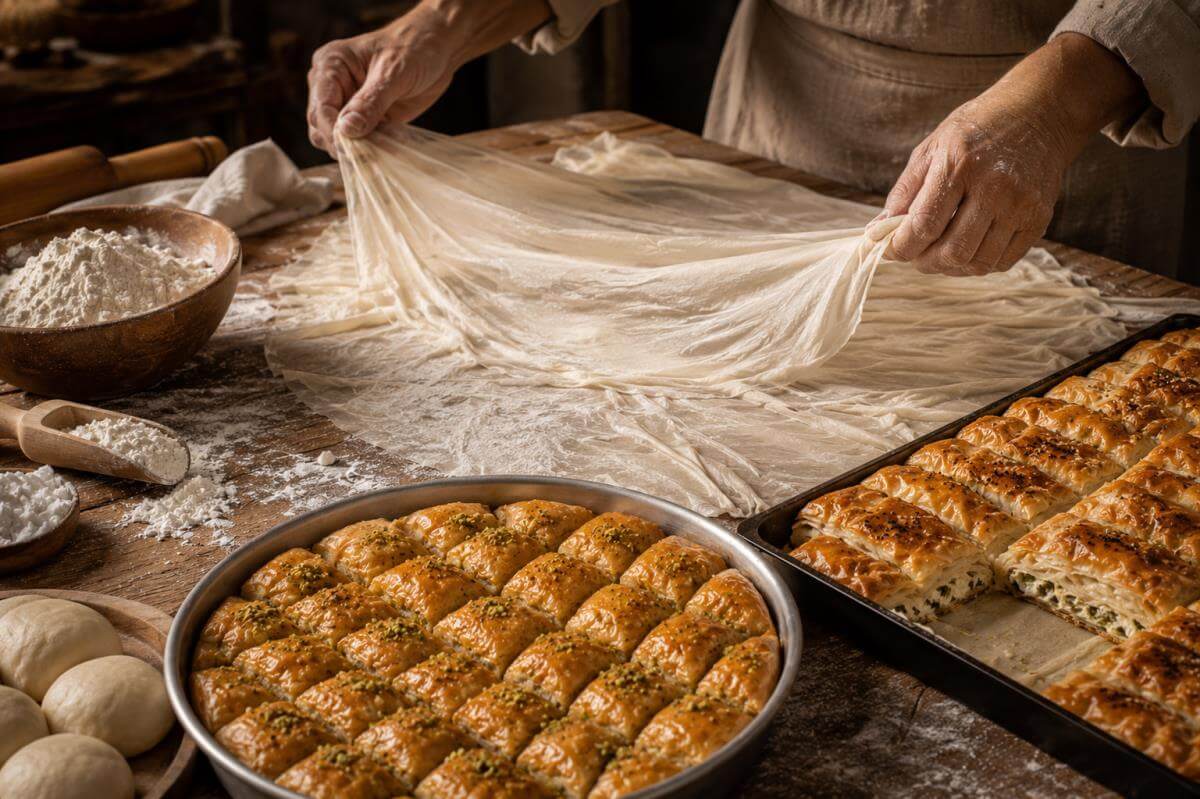
Baklava: suitable ash level, clear color, fine opening, and tear resistance.
Pastry: controlled gluten development, delicate texture, and homogeneous milling.
Every product should be validated through samples, technical data, and line trials.
The first purchasing question should be “What must this flour do in our process?” rather than “What is the cheapest available option?” A flour that performs well in bread may be too strong for cake. Flour suitable for cake may fail during a long pizza fermentation. Baklava requires opening behavior that cannot be assessed through protein percentage alone.
Product matching begins with a clear technical brief. The supplier should know the final product, recipe, equipment, mixing method, fermentation time, line speed, target shelf life, and current problems. The more precise the information, the more meaningful the sample recommendation becomes.
Quality Standards Are More Than Laboratory Numbers
Protein, ash, moisture, wet gluten, sedimentation, water absorption, and dough stability are important reference points. However, an analysis certificate does not replace a production trial. Two flours with similar protein percentages can behave differently because protein quality, wheat blend, milling, and enzyme activity vary.
For industrial users, practical quality means repeatability. Dough should reach the expected consistency within the established mixing time. It should move through dividers, sheeters, depositors, or extrusion systems without creating unnecessary adjustment. The baked product should meet volume, color, texture, and handling targets.
|
Criterion |
Importance for the Business |
|
Protein structure |
Influences dough strength, elasticity, volume, and processing |
|
Ash level |
Relates to color, mineral content, and application suitability |
|
Moisture |
Affects storage, weight basis, stability, and shelf management |
|
Water absorption |
Influences recipe yield, dough consistency, and cost |
|
Batch consistency |
Supports similar performance across deliveries |
|
Application fit |
Helps achieve the intended result in bread, pizza, baklava, börek, or pastry |
|
Technical support |
Speeds up evaluation when performance changes occur |
A complete approval process should combine documentation, sample analysis, pilot production, sensory evaluation, and commercial review. If the product is critical, repeat the trial on different production days and with different operators. This reveals whether the flour is robust enough for real working conditions.
How Food Safety Standards Influence Purchasing
Food safety is a non-negotiable part of supplier selection. Businesses should evaluate whether the producer operates an effective food safety management system, controls physical, chemical, and biological risks, maintains traceability, and responds to nonconformities in a documented manner.
Certificates may provide useful evidence, but they should be reviewed for scope, validity, and relevance. A certificate alone does not answer every question. Purchasing and quality teams should also evaluate allergen management, pest control, foreign-material prevention, cleaning, storage, transport hygiene, recall procedures, and complaint handling.
Specifications should be documented. Product name, intended use, key analytical limits, packaging, labeling, shelf life, storage conditions, and delivery requirements should be agreed. This creates a common reference when a shipment is evaluated.
Traceability: The Quiet Assurance of a Reliable Chain
Traceability means being able to connect the delivered flour to its production batch, raw-material records, quality controls, packaging, and shipment. In a complaint or investigation, this information allows the parties to move from assumption to evidence.
A supplier should be able to identify when and where the product was produced, which analyses were completed, and which customers received related batches. The buyer should maintain receiving records, batch identification, silo or warehouse allocation, and production usage.
Traceability also supports improvement. If a change in dough behavior appears, technical teams can compare batch data, process conditions, ingredient records, and storage history. Without traceability, every problem becomes a debate; with it, the cause can be narrowed systematically.
Logistics Continuity and Stock Management
A technically suitable flour has little value if it does not arrive when needed. Delivery planning should match the rhythm of production, storage capacity, minimum stock, and seasonal demand.
Define an Optimum Stock Level
Too little stock exposes the business to line stoppage and emergency purchasing. Too much stock occupies space, ties up cash, and increases the risk of aging or improper storage. Set minimum, target, and maximum levels according to average use, supplier lead time, demand variation, and contingency needs.
Align Delivery with Production Rhythm
A bakery with daily high-volume output may need frequent deliveries. A seasonal confectionery producer may need planned increases before Ramadan or holidays. Share forecasts with the supplier so that production and logistics can be prepared.
Separate Products Clearly
When several flour types are used, storage and silo allocation must prevent mix-ups. Product labels, color coding, dedicated bins, and documented transfer procedures reduce the risk of using pizza flour in cake or baklava flour in bread.
Transport conditions also matter. Vehicles should be clean, dry, suitable for food, and protected from moisture and odors. Packaging must arrive intact. Bulk deliveries require controlled connections, line identification, and hygiene procedures.
The Advantages of Bulk Purchasing Beyond Price
Volume can create purchasing leverage, but the true benefit lies in process stability. Planned bulk purchasing may reduce order frequency, administrative work, emergency freight, and production interruptions. It can also support dedicated specifications, scheduled deliveries, technical visits, and joint improvement projects.
A lower unit price is not a saving if the flour absorbs less water, increases waste, requires recipe changes, slows the line, or produces more customer complaints. The meaningful comparison is total cost in use.
Total cost includes:
Purchase price and payment terms.
Freight, unloading, and handling.
Yield and water absorption.
Waste, rework, and rejected product.
Mixing time and energy use.
Downtime and line adjustment.
Storage requirements.
Technical support and complaint resolution.
A flour with a slightly higher purchase price may lower the total cost if it improves yield and process reliability.
Why Long-Term Supplier Relationships Are Strategic
More Accurate Product Guidance
A supplier that understands the customer’s line, recipe, and quality expectations can recommend products more accurately. This reduces repeated trial-and-error purchasing.
Faster Quality Communication
When teams know each other’s technical language, deviations can be evaluated faster. Samples, analysis, process data, and corrective actions can be shared through an established channel.
Safer Growth Planning
A growing business needs assurance that the supplier can support higher volume, new locations, exports, or additional product categories. Long-term planning allows both parties to prepare capacity, stock, and logistics.
Partnership does not mean avoiding performance measurement. On the contrary, the relationship should be supported by clear service indicators such as on-time delivery, complaint frequency, response time, batch acceptance, and improvement actions.
A Short Checklist for Purchasing and Quality Teams
Define the final product and required flour performance.
Request an up-to-date specification and relevant quality documents.
Approve the product through realistic production trials.
Compare total cost in use, not only price per ton.
Agree on packaging, lead time, delivery frequency, and minimum order.
Confirm batch traceability and complaint procedures.
Establish storage rules and stock rotation.
Review supplier performance periodically.
Share demand forecasts and planned changes.
Maintain an approved alternative or contingency plan when necessary.
Özmen Un’s Approach: Application-Focused Supply
Professional supply is built on consistent product performance, accurate guidance, and continuity. Özmen Un offers flour varieties for different areas of use and aims to help businesses select products according to their production expectations.
For buyers, this application-focused approach can simplify portfolio management. Bread, pizza, baklava, pastry, and brand-specific solutions are evaluated according to the process rather than treated as interchangeable commodity flour.
A supplier conversation should therefore include the product, process, and commercial structure together. The best result comes when purchasing, quality, production, and supplier technical teams work from the same definition of success.
How to Make the Right Decision in Professional Supply
The right bulk flour decision is the one that protects the production line and the finished product at the same time. It combines technical fit, food safety, traceability, reliable logistics, responsive support, and a sustainable commercial model.
Businesses that evaluate flour through this wider lens gain more than a stable ingredient. They gain predictable dough behavior, simpler planning, lower operational risk, and a stronger foundation for consistent customer experience.
Frequently Asked Questions About Bulk Flour Purchasing
What should businesses check when buying flour in bulk?
Evaluate application fit, specification, batch consistency, food safety systems, traceability, water absorption, packaging, delivery performance, storage requirements, technical support, and total cost in use.
How does the supply chain affect flour quality?
Quality can be influenced by raw-material selection, milling, packaging, transport, warehouse humidity, stock rotation, and handling. A controlled chain protects the characteristics established at the mill.
Can one flour be used for every production line?
Usually not. Bread, pizza, baklava, cake, börek, and industrial products require different balances of strength, elasticity, absorption, color, and processing tolerance.
How should bulk flour stock be managed?
Set minimum and maximum stock levels, align deliveries with consumption, apply FIFO, separate product types, monitor warehouse conditions, and maintain batch traceability from receipt to production.