Flour Selection for Ramadan Desserts Güllaç and Baklava
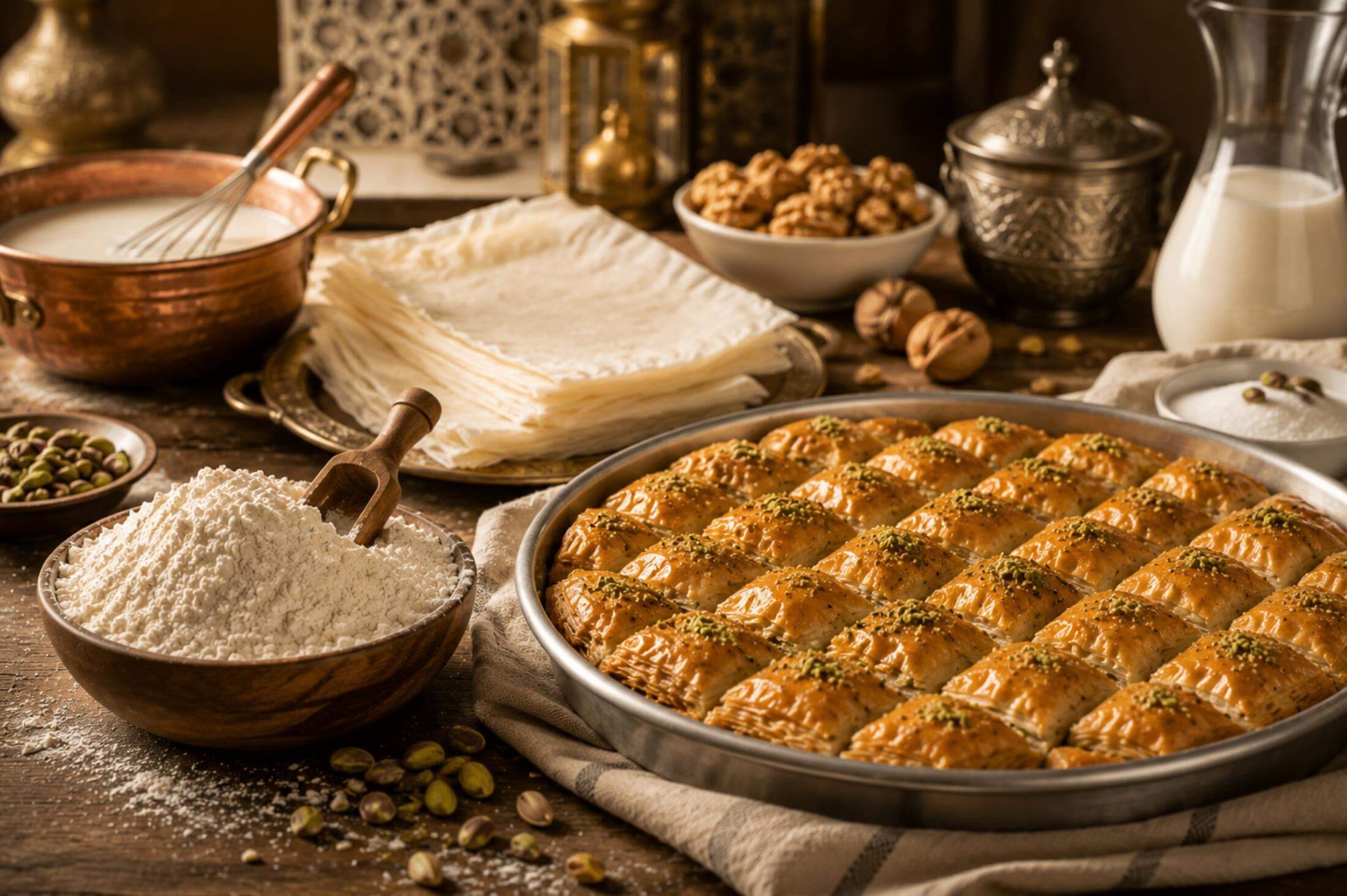
Dessert at a Ramadan table is more than the final course. Sometimes it is the light, milky comfort of güllaç, the delicate layered dessert traditionally associated with the month of Ramadan. Sometimes it is baklava, prepared with patience for Eid and shared with family and guests. Both are built on balance: sweetness must not overwhelm, texture must remain clear, and the dessert should feel complete rather than heavy.
Flour plays different roles in these two traditions. Home cooks usually buy ready-made güllaç sheets, yet understanding the starch-and-flour structure of the sheets helps explain why milk temperature and soaking time matter. In baklava, flour has a direct and decisive role: the dough must roll paper-thin, bake into distinct layers, and remain structured after it meets syrup. At Özmen Un, we view Ramadan and Eid as moments when some of the most refined techniques of Turkish cuisine return to the home kitchen.
Tips for Making Güllaç at Home
Quick Checklist
Use milk that is warm enough to soften the sheets, but not boiling.
Place the sheets one by one and distribute milk evenly over every layer.
Avoid pressing the layers, which can tear the softened sheets.
Allow sufficient resting time for the milk to spread through the dessert.
For baklava, choose special-purpose flour with suitable color and controlled elasticity.
Güllaç appears simple because it contains few ingredients, but its texture is sensitive. The sheets should soften without dissolving. The milk should be absorbed without collecting in large pools. Nuts and fruit should add contrast without crushing the delicate layers.
Güllaç: Details That Determine a Light Texture
Traditional güllaç sheets are made from a thin starch-based mixture cooked into translucent leaves. When warm sweetened milk is added, the dry sheet hydrates quickly. This is why temperature is critical. Milk that is too cool may not soften the sheets evenly; milk that is boiling can weaken them too rapidly and create a paste-like texture.
Control the Milk Temperature
Heat the milk with sugar until the sugar dissolves, then allow it to cool slightly. The ideal temperature is warm-hot rather than aggressively boiling. When poured onto a sheet, the milk should soften it within a short time without causing it to disintegrate.
Pour in stages. Place one sheet, add enough milk to cover it, wait briefly, and continue. This gives each layer an equal opportunity to absorb liquid.
Keep the Layers Balanced
More sheets do not always create a better dessert. Excessive layering can leave the center dry, while too much milk can make the structure collapse. Follow the quantity suggested for the size of your dish, and distribute nuts between selected layers rather than creating a thick, heavy filling.
Walnuts and pistachios are common choices. They should be fresh and not ground into an oily paste. Large, sharp pieces can tear softened sheets, so a medium chop works well.
Resting Completes the Dessert
Güllaç needs time in the refrigerator for the milk to move through the layers and for the texture to settle. Serve it chilled, but do not prepare it so far in advance that the sheets lose all definition. Fresh fruit, pomegranate seeds, rose water, or cinnamon may be used with restraint.
The Flour Behind Fine Baklava Layers
Baklava dough asks more from flour than most home pastries. The sheet must be rolled until light can almost pass through it. It must be lifted without tearing, laid into the tray without shrinking, and separated from neighboring layers during baking.
Flour suitable for baklava should combine balanced protein, fine milling, controlled elasticity, stable absorption, and an appropriate ash level. No single figure guarantees success; the way these characteristics work together determines the dough’s behavior.
|
Flour Characteristic |
Contribution to Baklava Dough |
|
Balanced protein structure |
Supports opening and resistance without excessive toughness |
|
Fine, homogeneous milling |
Helps create a smoother dough surface |
|
Controlled elasticity |
Reduces tearing while limiting snap-back |
|
Suitable color and ash level |
Supports a clean dough color and attractive baked appearance |
|
Stable quality |
Makes consistency easier to repeat from one tray to the next |
What Should Baklava Dough Feel Like?
The dough should be firm enough to divide cleanly, but not dry. It should become smooth during kneading and should not show cracks around the edges. After resting, each portion should flatten easily under the rolling pin.
Liquid must be added carefully because flour absorption varies. If the dough is too wet, the baker uses excessive starch during opening. If it is too dry, the sheets tear before reaching the desired thickness.
Never Skip the Resting Stage
Resting allows the gluten structure to relax. Cover the portions so their surfaces do not dry. Depending on the recipe and room temperature, a longer rest may make the difference between dough that fights the rolling pin and dough that opens willingly.
Use Starch with Restraint
Starch prevents sheets from sticking during opening, but excess starch can remain between layers and create a dry, dusty texture. Use enough to keep the dough separate, then brush off visible excess before assembling the tray.
Baking Requires Patience
Baklava needs time for inner layers to dry and become crisp. Excessively high heat browns the surface before the center is ready. A properly preheated oven and a controlled baking temperature allow color to develop gradually.
Butter distribution is also important. Each layer should receive enough fat to separate, but the tray should not contain heavy pools. Clarified butter is often used because milk solids may burn during long baking.
Syrup Balance: The Final Touch
Syrup determines whether the crisp layers remain defined or become heavy. Sugar concentration, boiling time, lemon, temperature, and quantity all influence the result.
A common principle is to avoid combining pastry and syrup when both are extremely hot. Many recipes use hot baklava with cooled syrup or cooled baklava with hot syrup. Follow the selected method consistently and pour the syrup evenly, not only in the center.
After syruping, allow the tray to rest. Cutting and serving immediately does not give the liquid enough time to distribute. Well-made baklava absorbs syrup while keeping a clear layered bite.
Practical Preparation for Ramadan and Eid
Prepare Ingredients in Advance
Measure nuts, clarify butter, prepare syrup ingredients, and arrange equipment before the dough is exposed. Fine sheets dry quickly, so interruptions create unnecessary risk.
Store Flour Correctly
Keep flour in a cool, dry place away from odors. If it has compacted, loosen it before use. Do not use flour that has absorbed moisture or developed an unusual smell, as this can affect both dough consistency and flavor.
Match Flour to the Recipe
Bread flour, cake flour, and baklava flour are designed for different outcomes. Choosing flour according to intended use helps the dough perform more reliably. Özmen Un offers product categories developed for different areas of baking, including fine pastry applications.
Plan the Serving Time
Güllaç is best prepared close enough to service that the sheets remain delicate. Baklava can often be prepared earlier and benefits from resting after syrup is added. Organizing these two desserts according to their own timelines reduces pressure on the day of the meal.
Preserving Traditional Flavor
Traditional desserts do not need excessive decoration to feel special. The quality of milk, butter, nuts, flour, and sugar becomes more visible when the recipe is balanced. Rose water should be subtle, syrup should support rather than hide the pastry, and nuts should taste fresh.
Güllaç and baklava also offer two different expressions of the same culinary value: restraint. Güllaç achieves elegance through lightness and softness. Baklava achieves it through fine layers, controlled sweetness, and crispness. In both, the right technique protects the character of the ingredients.
Özmen Un’s approach of developing flour according to use supports home bakers and professionals who want predictable dough performance. In Ramadan and Eid preparations, choosing flour for the actual task is one of the simplest ways to protect the time and effort invested in the recipe.
|
Discover Özmen Un baklava flour options for refined Ramadan and Eid desserts. |
Frequently Asked Questions About Ramadan Desserts and Flour
Which flour should be used for baklava?
Choose special-purpose baklava flour with controlled elasticity, fine milling, stable absorption, and a suitable color profile. It should allow the dough to roll very thin without tearing or shrinking excessively.
What should I pay attention to when making güllaç?
Use warm, not boiling, milk; soften each sheet evenly; avoid pressing the layers; and allow the dessert to rest in the refrigerator. Balance the number of sheets, milk quantity, and filling.
Why does baklava dough tear while rolling?
The dough may be too dry, insufficiently kneaded, not rested long enough, or made with flour that lacks suitable extensibility. Cover the portions, allow more relaxation time, and manage hydration carefully.
Does flour quality matter in syrup desserts?
Yes. Flour affects opening, layer separation, baking color, and the ability of the pastry to absorb syrup without becoming completely doughy. Stable flour quality also helps produce similar results each time.