Choosing Flour for Holiday Baklava and Börek
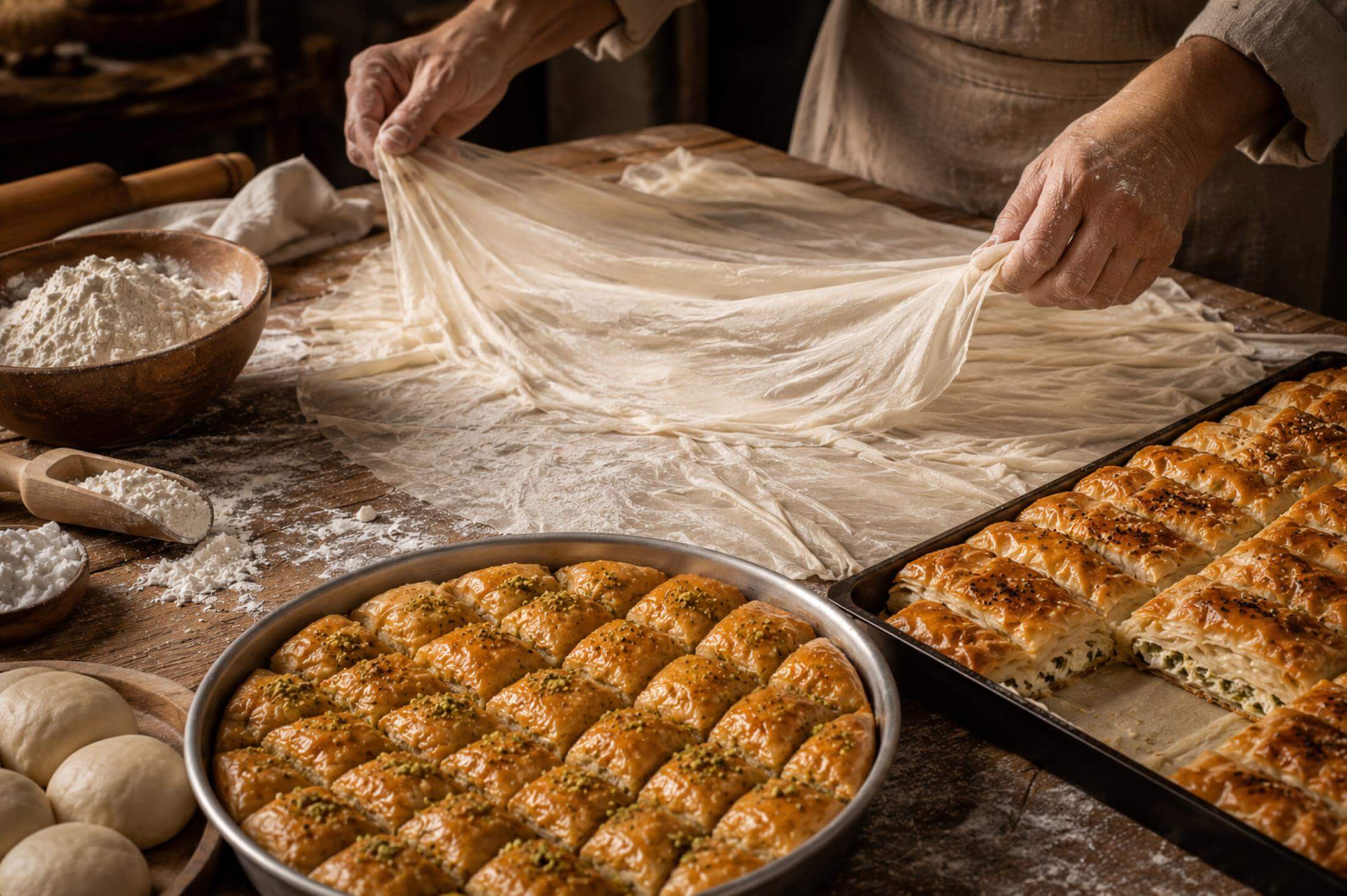
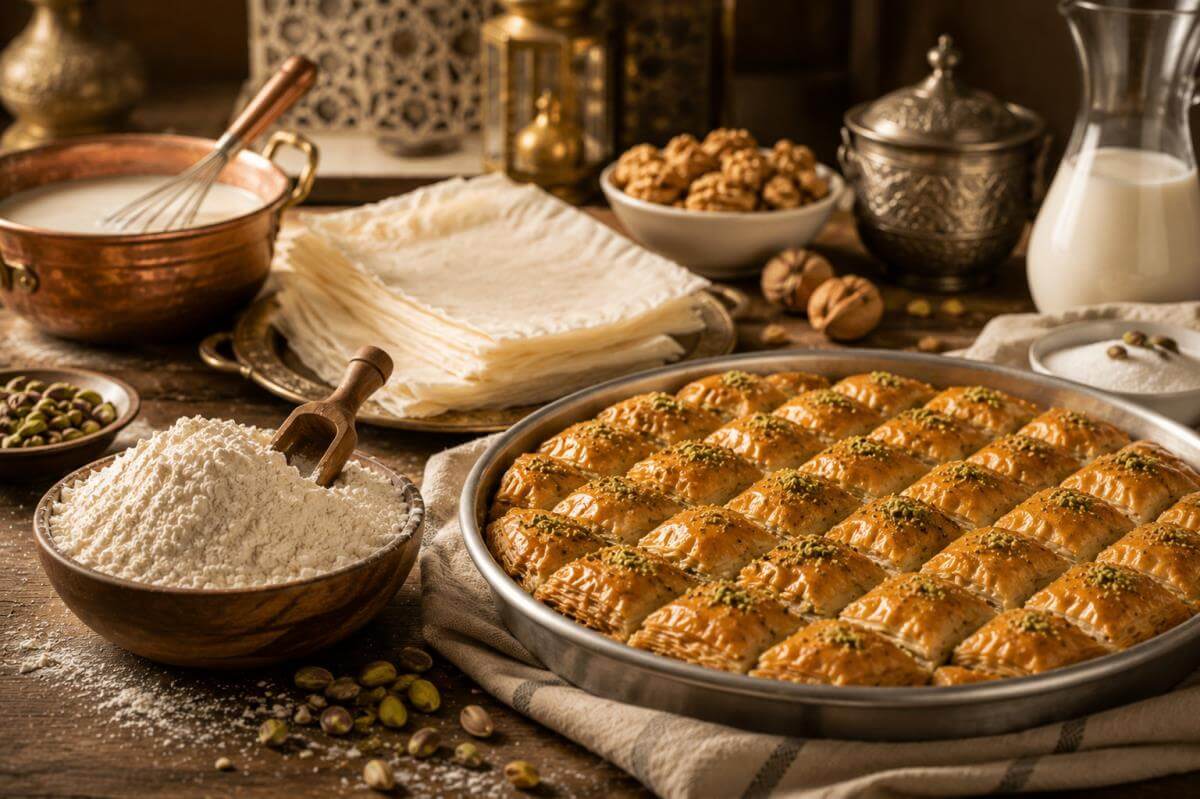
Holiday preparations begin long before guests gather around the table. In many Turkish homes, the atmosphere changes the moment baklava dough is divided into small portions or a tray of börek is planned. The rolling pin comes out, fillings are prepared, butter is clarified, and recipes passed down through generations return to the center of the kitchen. These dishes carry more than flavor; they carry memory, patience, and the pride of serving something made by hand.
The success of these delicate pastries depends heavily on flour. A baklava sheet must stretch until it is almost transparent without tearing. Börek dough must hold its filling, remain flexible during shaping, and bake without becoming gummy. Baklava should separate into crisp layers and stay structured after syrup is added. At Özmen Un, we see holiday pastries not only as recipes, but as expressions of craftsmanship in which the right flour supports every movement of the baker’s hands.
Choosing Flour for Baklava
Quick Checklist
A low and suitable ash level supports a clear, pale dough color.
Controlled elasticity helps the dough become thinner without snapping back.
Good extensibility allows sheets to reach paper-thin thickness without tearing.
Stable water absorption makes it easier to obtain the same consistency in every portion.
For börek, resistance to filling, folding, and, in some styles, boiling must also be considered.
Baklava is one of the most demanding flour-based products because the dough must combine opposite qualities. It needs strength, but it must not be stiff. It needs elasticity, but it should not pull back every time the baker rolls it. It must become extremely thin, yet remain intact long enough to be lifted, layered, buttered, and baked.
General-purpose flour can sometimes produce acceptable results, but consistency is difficult. Flour developed for baklava is milled and selected with fine opening performance in mind. Its protein structure, color, ash level, and absorption should work together. The result is a dough that becomes smooth during kneading, relaxes after resting, and widens evenly under the rolling pin.
The Foundation of Fine Baklava Layers
The first indication of suitable flour appears during mixing. The dough should come together without rough patches, absorb liquid evenly, and become smooth after kneading. If the surface remains cracked, the flour may need more hydration or the dough may require a longer rest. If it becomes sticky and weak despite careful mixing, the flour may not provide enough structure.
Resting is essential. During kneading, the gluten network becomes tense. A well-rested dough relaxes, allowing the baker to roll it thinner with less force. Trying to open dough immediately often causes it to shrink back or tear around the edges.
Low ash is often associated with a cleaner, brighter flour color, which is valuable in baklava. The dough should remain pale before baking and develop an appetizing golden tone in the oven. However, color alone does not determine performance; protein quality and milling consistency are equally important.
Özmen Un’s product approach differentiates flour according to its intended use. In recipes that require fine manual work, choosing flour designed for the task makes the process more predictable and helps protect the effort invested in each tray.
Choosing Flour for Börek
Börek is a broad family of pastries. Hand-rolled börek, water börek, spiral börek, tray börek, and filled pastries do not all ask for the same dough behavior. Yet the flour must generally provide easy opening, flexibility, filling resistance, and balanced baking.
|
Expectation in Börek Dough |
How Flour Contributes |
|
Easy rolling |
Helps the dough respond smoothly to a rolling pin or oklava |
|
Flexibility |
Supports expansion without tearing |
|
Ability to carry filling |
Helps the sheet hold cheese, meat, vegetables, or other fillings |
|
Balanced baking |
Supports browning outside without leaving a raw, gummy center |
For hand-rolled börek, the dough should become thin without cracking. For water börek, the sheets must withstand brief boiling and handling. A dough that is too weak can break in the water; one that is too strong may be difficult to roll and feel tough after baking.
The moisture of the filling also matters. Spinach, cheese, potato, or minced meat can release water during baking. Flour must support a dough that protects the layered structure rather than absorbing all the moisture and turning heavy. Draining wet fillings and cooling them before assembly are just as important as choosing the right flour.
How to Roll Thin Yufka
Knead Well, but Do Not Rush to Roll
A smooth, well-kneaded dough is easier to divide and produces more even sheets. Knead until the dough has no dry patches and its surface begins to feel satiny. Then cover it to prevent drying and let it rest. The resting period allows moisture to spread and gluten tension to relax.
Adjust the Consistency Carefully
Dough that is too dry cracks at the edges. Dough that is too wet sticks to the surface and requires excessive dusting flour, which can make the finished layers dry. Add liquid and flour gradually, and aim for a firm but pliable dough.
Prepare Equal Portions
Equal dough balls make it easier to produce sheets of similar diameter and thickness. This is particularly important in baklava, where uneven layers bake at different rates. Weighing the portions may seem formal for home cooking, but it brings remarkable consistency.
Avoid Excess Flour During Rolling
Dusting prevents sticking, but too much flour remains between the layers and can produce a dry or powdery texture. In baklava, starch is often used for opening because it helps the sheets separate. Use only what is needed and brush away the excess before layering.
Use the Rolling Pin to Expand, Not Crush
The aim is to encourage the dough outward, not press it flat with force. Apply even pressure and rotate the sheet regularly. If the dough keeps shrinking, cover it and let it rest for a few more minutes rather than fighting it.
Holiday Preparation Tips for a More Organized Kitchen
Holiday baking becomes easier when tasks are separated. Prepare nuts, fillings, clarified butter, syrup ingredients, and storage containers before starting the dough. This keeps the work surface clean and prevents the dough from drying while you search for equipment.
Flour should be stored in a cool, dry place and brought to the kitchen before mixing. Extremely cold ingredients can change dough development, while humidity can affect how much liquid flour absorbs. Sift the flour if it has compacted during storage.
For baklava, syrup can often be prepared in advance and cooled according to the recipe method. For börek, fillings should be completely cool before they meet the dough. Warm filling softens the sheet, releases steam, and makes assembly difficult.
Plan the oven schedule as well. Baklava requires patient, even baking so the layers dry and color throughout. Börek may need a different temperature and timing depending on the thickness, filling, and pan material. Avoid placing two very different products in the oven simply because the trays fit.
Details That Affect Baking Performance
Butter or oil must be distributed evenly. In baklava, each layer needs enough fat to separate and crisp, but pools of butter can create heavy spots. Clarified butter is often preferred because removing milk solids reduces the risk of burning during long baking.
In börek, the sauce between layers can contain milk, yogurt, eggs, oil, or mineral water depending on the style. The quantity should complement the dough, not flood it. Excess sauce produces a soft, custardy interior when the desired result may be crisp and layered.
The oven must be preheated. A cold oven causes butter to melt before the dough structure sets, allowing layers to compress. Strong initial heat helps define the pastry, while controlled baking ensures the center cooks. Baklava should not be rushed with extremely high heat; it needs time for the inner layers to become crisp.
Syrup balance is the final test for baklava. The layers must absorb sweetness without losing all their structure. One of the classic approaches is to combine hot pastry with cool syrup or cool pastry with hot syrup, depending on the recipe. What matters is avoiding uncontrolled heat on both sides and allowing sufficient resting time after syruping.
Small Touches That Strengthen Traditional Flavor
The quality of butter, nuts, cheese, herbs, and spices becomes clearer when the dough is well made. Pistachios or walnuts should be fresh and protected from rancidity. Cheese filling should be flavorful but not watery. Herbs should be washed and dried carefully.
Do not hide the dough under excessive filling. In both baklava and börek, balance allows the flour-based structure to remain part of the experience. The pleasure comes from contrast: crisp layers against syrupy nuts, or tender inner folds against a browned börek surface.
Serving time also matters. Baklava benefits from resting so the syrup distributes evenly. Börek is often best after a short rest that allows steam to settle without losing crispness. Cutting too early can compress the layers and cause filling to escape.
The Right Flour Protects the Work Behind the Recipe
Holiday pastries require time, space, and concentration. Choosing suitable flour does not replace skill, but it allows skill to show. The dough opens more evenly, resting becomes more effective, layers remain intact, and the baking result is easier to repeat.
Özmen Un offers flour categories for different culinary uses, including products designed for fine pastry work. When baklava and börek flour is selected according to the recipe, the baker gains greater control over elasticity, color, absorption, and baking performance.
The reward is more than a beautiful tray. It is the sound of crisp baklava, the layered cut of börek, and the confidence of placing a handmade dish at the center of the holiday table.
|
Discover Özmen Un options for fine baklava sheets and beautifully layered börek. |
Frequently Asked Questions About Holiday Baklava and Börek
Can regular flour be used instead of baklava flour?
It can produce a result, but the dough may be harder to roll extremely thin and may tear or shrink. Flour developed for baklava is selected for controlled elasticity, fine opening, color, and resistance during layering and syruping.
What should good börek flour be like?
It should create dough that rolls easily, stretches without tearing, carries the filling, and bakes evenly. The ideal strength depends on the börek style; water börek requires greater handling resistance than a simple tray börek.
Why does dough tear while rolling thin yufka?
Common causes include insufficient kneading, inadequate resting, dough that is too dry, uneven pressure, or flour with weak extensibility. Cover the dough, allow it to relax, and add moisture carefully if the edges remain dry.
When should holiday baklava be prepared?
Baklava is often prepared one or two days before serving because the flavor and syrup distribution improve with rest. Store it according to the recipe and room conditions, protecting it from humidity that could soften the layers.