Balanced Recipes with Lower-Glycemic Flour Choices
The word “diet” often makes people think of giving things up: bread, poğaça, dessert, or every food they enjoy. A more sustainable approach is to examine the entire recipe—flour, sugar, fat, filling, portion, and meal context—and make deliberate choices. Flour is one part of that picture, and choosing whole-grain or alternative flour can add fiber, flavor, and a more satisfying texture.
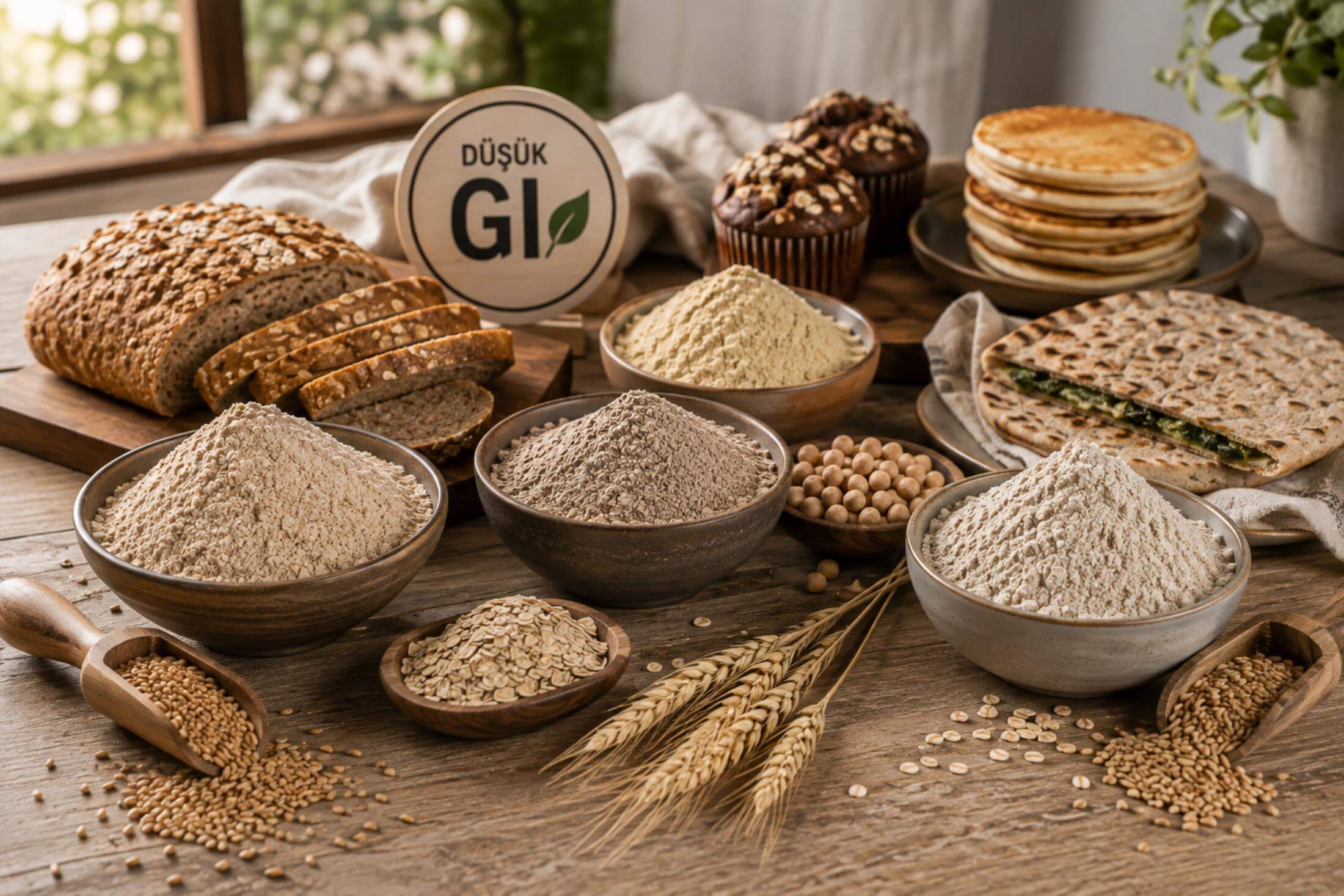
Whole wheat flour, buckwheat flour, oat flour, einkorn flour, and legume flours are frequently discussed in relation to lower-glycemic eating. Their actual effect depends on the product, milling, portion size, cooking method, and other ingredients. No flour should be presented as a weight-loss solution or a guarantee of stable blood sugar. People with diabetes, insulin resistance, or other medical needs should follow individualized professional advice.
Which Flours Can Be Used in Balanced Recipes?
Quick Checklist
Whole wheat flour: bread, crepes, and savory muffins.
Buckwheat flour: galettes, crepes, and rustic pancakes.
Oat flour: pancakes, cookies, and breakfast cakes.
Einkorn flour: bazlama, gözleme, and mixed-flour bread.
Legume flours: savory pancakes and protein-rich snacks.
The goal is not to force every flour into every recipe. Choose according to flavor and structure, then build the whole meal around appropriate portions and nutrient variety.
What Is the Glycemic Index?
The glycemic index, or GI, is a system that ranks carbohydrate-containing foods according to how quickly they raise blood glucose under standardized testing conditions. Foods are often grouped as low, medium, or high GI.
GI is useful, but it has limits. It does not automatically reflect a normal serving size, the amount of carbohydrate eaten, or the effect of a mixed meal. This is why glycemic load, portion, fiber, protein, fat, and cooking method also matter.
A whole wheat muffin with a large amount of sugar is not necessarily a balanced choice simply because the flour is whole grain. A moderate portion of bread eaten with vegetables, protein, and healthy fat may produce a different response from the same bread eaten alone.
Why Flour Choice Can Matter
Refined flour is milled primarily from the endosperm, while whole-grain flour retains bran and germ. Fiber and the more intact grain structure can slow digestion compared with highly refined products, although processing and recipe design still influence the result.
Alternative flours may also bring protein, fat, or different types of fiber. Chickpea flour, for example, has a different nutritional profile from rice flour. Almond flour contains more fat and less starch, but it is calorie-dense and unsuitable for nut allergies.
The most useful approach is to compare products, read labels, and consider how the flour is used.
Whole Wheat Flour
Whole wheat flour is one of the easiest ways to add a fuller grain structure to familiar recipes. It works in bread, pancakes, crepes, muffins, and savory pastries.
Begin with 25 to 50 percent substitution if the family is used to white flour. Whole wheat absorbs more water and can make dough denser, so increase liquid carefully and allow resting time.
Pair whole wheat bread or pancakes with protein and vegetables rather than relying on the flour alone for satiety.
Buckwheat Flour
Buckwheat is naturally gluten-free and has an earthy, nutty flavor. It is excellent in thin galettes and savory crepes. It also works in pancakes and blended breads.
Its strong flavor can reduce the need for excessive sweetness in some recipes. Combine it with yogurt, eggs, vegetables, herbs, cheese, or mushrooms.
People requiring strict gluten-free food should choose a product with appropriate labeling because cross-contact can occur.
Oat Flour
Oat flour gives a mild sweetness and soft texture. It is useful in breakfast pancakes, muffins, and cookies. Oats contain soluble fiber, including beta-glucan.
A batter made with oat flour often thickens after resting. Add liquid gradually and avoid making it excessively stiff. Use eggs, yogurt, or fruit puree to support moisture.
For gluten-free use, choose oats specifically produced and labeled for that purpose.
Einkorn Flour
Einkorn, known as siyez in Türkiye, has a nutty flavor and golden tone. It is wheat and contains gluten.
Use it in bazlama, gözleme, pancakes, noodles, and bread blends. The dough may be softer and more delicate than modern bread dough, so partial substitution and gentle mixing are practical.
Einkorn should not be described as automatically low GI in every form. Milling, recipe, and portion still determine the overall effect.
Legume Flours
Chickpea, lentil, and other legume flours add strong flavor, protein, and fiber. They perform well in savory pancakes, crackers, vegetable fritters, and coatings.
They do not form wheat gluten, so yeast bread requires a blend and additional structure. Their taste is best supported with spices, herbs, olive oil, vegetables, and cheese.
|
Flour |
Practical Use |
Texture Consideration |
|
Whole wheat |
Bread, crepes, muffins |
Needs more hydration and may create a denser crumb |
|
Buckwheat |
Galettes, pancakes |
Strong flavor; often best in blends |
|
Oat |
Breakfast cakes, cookies |
Thickens after resting and needs moisture |
|
Einkorn |
Bazlama, gözleme, bread blends |
Delicate dough; gentle mixing helps |
|
Chickpea or legume flour |
Savory pancakes and crackers |
Strong flavor and no gluten structure |
Building a Balanced Recipe
Control Added Sugar
Changing flour while keeping a very high sugar level may not support the intended goal. Reduce sweetness gradually and use spices, fruit, cocoa, vanilla, or nuts for flavor.
Include Protein
Eggs, yogurt, cheese, legumes, fish, chicken, or other protein sources can make a meal more complete. A savory muffin with vegetables and cheese differs from a sweet muffin eaten alone.
Use Healthy Fats in Appropriate Amounts
Olive oil, nuts, seeds, and avocado can contribute flavor and satiety. They remain energy-dense, so quantity matters.
Add Vegetables and Fruit
Vegetables add volume, fiber, color, and moisture to savory baking. Whole fruit is generally preferable to relying on juice or large quantities of dried fruit.
Keep Portions Realistic
Even a carefully designed product can become unbalanced when portions are excessive. Smaller pancakes, thinner slices, and appropriately sized snacks make the recipe easier to fit into a meal plan.
Practical Recipe Ideas
Whole Wheat Savory Muffins
Combine whole wheat flour with eggs, yogurt, olive oil, herbs, grated zucchini, and cheese. Squeeze excess water from vegetables to prevent a gummy center.
Buckwheat Galette
Prepare a thin batter with buckwheat flour, water, and salt. Fill with mushrooms, spinach, egg, or cheese. This is a satisfying meal rather than a sweet snack.
Oat Pancakes
Use oat flour, eggs, milk or yogurt, baking powder, and cinnamon. Serve with fresh fruit and plain yogurt instead of a large quantity of syrup.
Mixed-Flour Bread
Blend bread flour with whole wheat, einkorn, or rye. Use a longer fermentation for flavor and adjust water according to the flour.
Chickpea Crackers
Mix chickpea flour with olive oil, water, salt, sesame, and spices. Roll thin and bake until dry and crisp.
Cooking and Processing Matter
Finely milled flour is digested differently from an intact grain. Baking, boiling, cooling, reheating, and fermentation can also influence the product’s structure. This is why a food cannot be evaluated through the name of the flour alone.
Longer fermentation may improve flavor and dough handling, but it does not turn a refined product into a low-carbohydrate food. Claims should remain realistic.
Reading Nutrition Labels
Compare fiber, carbohydrate, protein, added sugar, and serving size. A product marketed as “whole grain” may still contain large amounts of sugar or fat. A dark color may come from molasses or coloring rather than whole flour.
For packaged flour, look at the ingredient list and nutrition panel. Choose a product appropriate for the recipe and dietary requirement.
A Sustainable Approach to Form and Enjoyment
People are more likely to maintain eating habits that are enjoyable, flexible, and compatible with family life. Instead of labeling pastry as forbidden, redesign it: use more whole-grain flour, reduce added sugar, include vegetables or protein, control portions, and eat it as part of a balanced meal.
Özmen Un offers flour products for different applications, including whole wheat options. Matching flour to the recipe supports both texture and conscious choice.
The aim is not perfection. It is to make repeated, practical decisions that improve variety while preserving the pleasure of cooking and eating.
|
Explore Özmen Un whole wheat and application-specific flours for more balanced home recipes. |
Frequently Asked Questions About Lower-Glycemic Flour Choices
Which flour has the lowest glycemic index?
Values vary by product, milling, recipe, and testing. Whole-grain, buckwheat, oat, and legume-based products may have a different response from refined white flour, but no single flour guarantees a low-GI final recipe.
Is whole wheat flour suitable for weight loss?
It may support a more fiber-rich eating pattern, but weight management depends on total energy intake, portions, activity, and overall diet. Whole wheat flour is not a stand-alone weight-loss ingredient.
Is einkorn flour low glycemic?
Einkorn can provide a different grain profile, but its glycemic effect depends on milling, preparation, portion, and the entire meal. It should not be assumed to be low GI in every product.
How can I make baked goods more balanced?
Use appropriate portions, increase whole-grain or alternative flour gradually, reduce added sugar, include protein and vegetables or fruit, and avoid relying on the flour choice alone.