Choosing the Right Flour for Crisp, Layered Börek
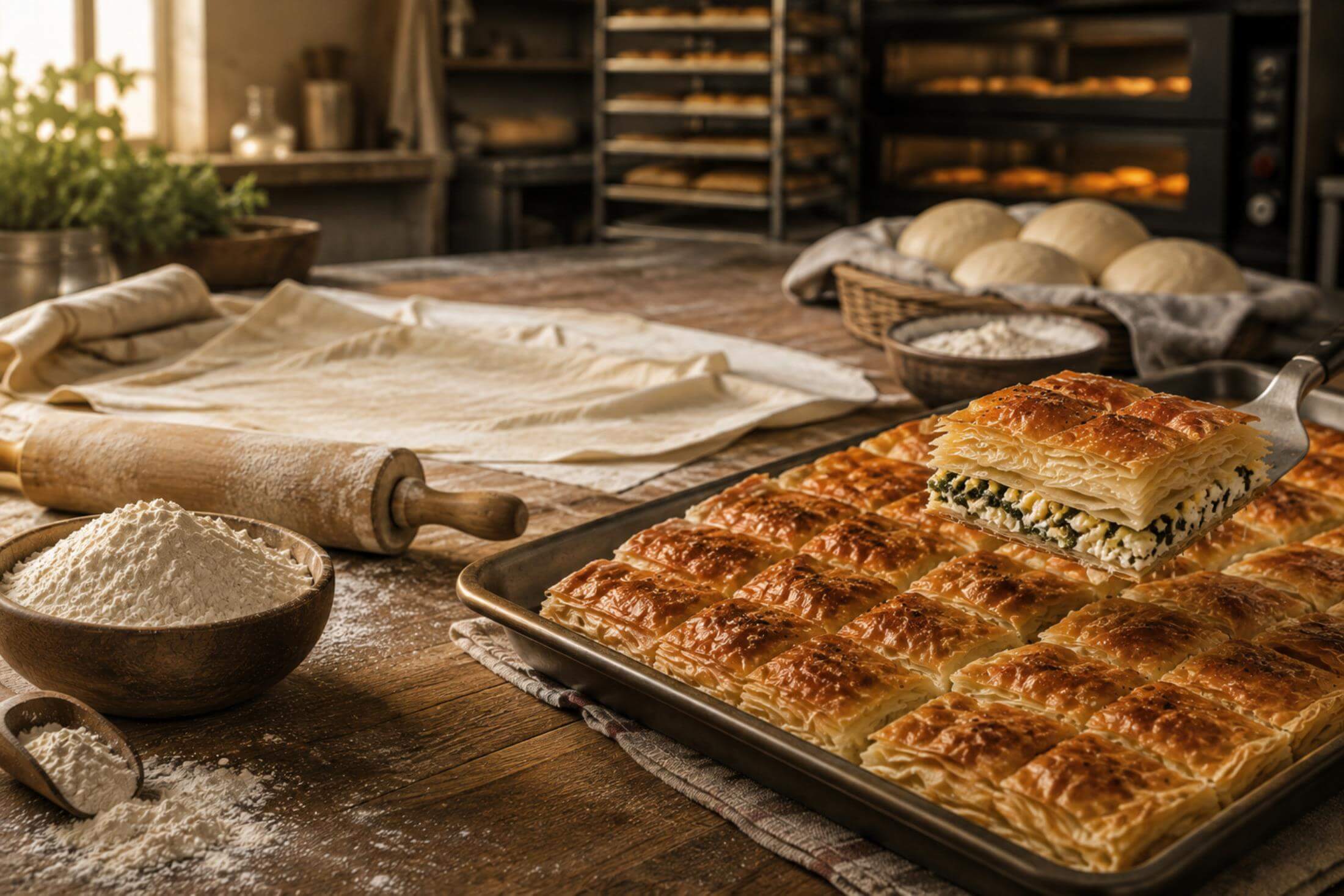
When börek leaves the oven, its aroma often brings everyone to the table. The ideal tray has a beautifully browned top, a crisp base, visible layers, and a filling that remains distinct instead of soaking into the dough. Achieving this result depends on butter or oil, filling, oven temperature, and technique—but the structure begins with flour.
Not every börek needs the same dough. Hand-rolled börek requires extensibility. Su böreği, or Turkish water börek, needs sheets that can survive brief boiling. A crisp spiral börek needs layers that separate during baking. Ready-made yufka recipes focus more on sauce balance, but the quality of the original sheet still comes from suitable flour.
The question is therefore not simply “Which flour is used for börek?” The better question is “Which flour behavior does this börek style require?”
Flour for Hand-Rolled and Water Börek
Quick Checklist
The dough should roll easily without unnecessary snap-back.
Edges should become thin without cracking.
The sheet should carry the filling and avoid becoming gummy.
Water börek sheets should resist tearing during boiling and handling.
Layers should remain visible after oiling, folding, and baking.
Good börek flour creates a balanced dough. Flour that is too weak tears and spreads. Flour that is too strong resists rolling, requires longer rest, and may produce a hard bite.
What Makes Good Börek Flour?
Controlled Protein Structure
Börek dough needs gluten, but not the same strength as a chewy bagel or artisan bread. Protein should create a network that holds the sheet together while allowing it to widen.
Protein percentage alone is not enough. Extensibility, elasticity, absorption, and milling quality determine how the dough feels under the rolling pin.
Stable Water Absorption
If flour absorbs water inconsistently, the same recipe produces different dough from one batch to another. Stable absorption helps the baker repeat mixing and resting more reliably.
The dough should be firm enough to divide and soft enough to roll. A dry dough cracks; a wet dough sticks and requires excessive dusting flour.
Fine, Homogeneous Milling
Uniform flour creates a smoother dough surface and even hydration. This supports thin rolling and reduces rough spots where tearing begins.
Balanced Elasticity and Extensibility
Elasticity helps dough recover; extensibility allows it to stretch. Börek needs both, but excessive elasticity causes the sheet to shrink as soon as it is rolled. Resting helps, but suitable flour makes the process much easier.
|
Flour Characteristic |
Effect on Börek Dough |
|
Balanced protein |
Holds the sheet together without excessive toughness |
|
Good extensibility |
Allows thin rolling and folding |
|
Controlled elasticity |
Limits snap-back during opening |
|
Stable absorption |
Supports repeatable dough consistency |
|
Fine milling |
Creates a smooth surface and even thickness |
|
Baking performance |
Helps layers brown and remain distinct |
Flour for Hand-Rolled Börek
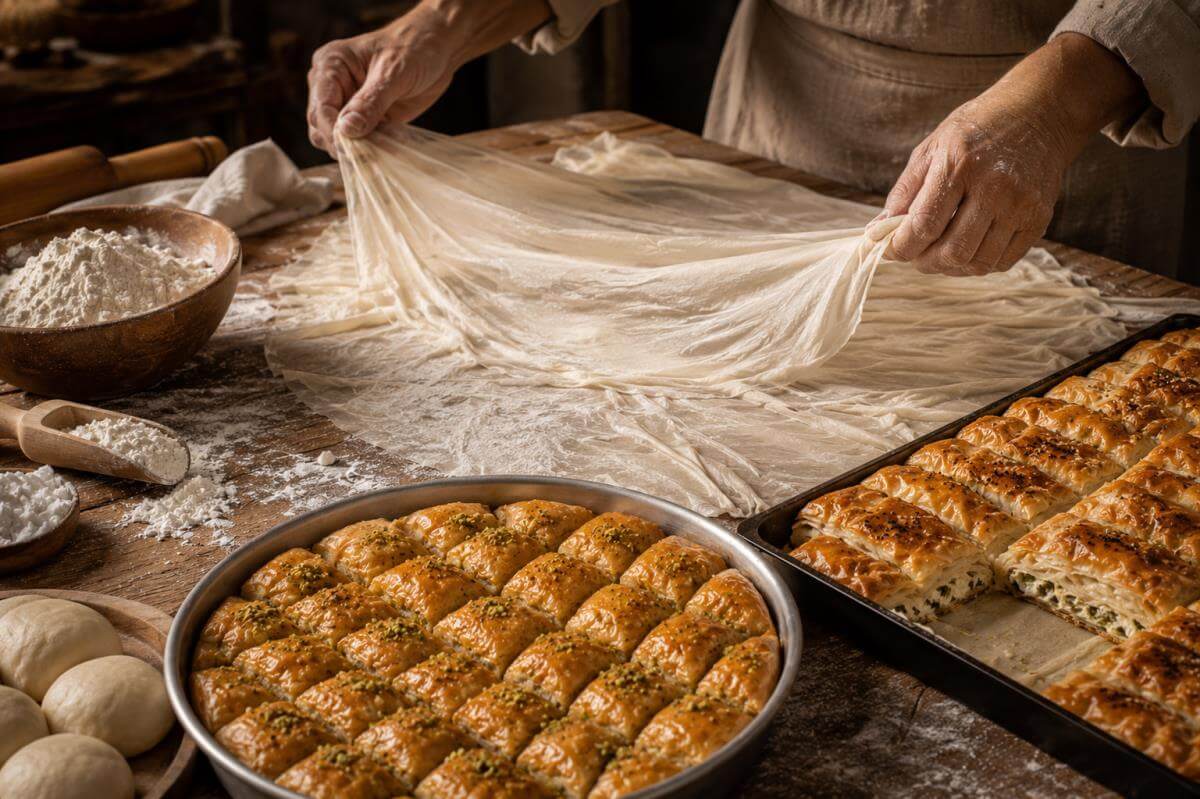
Hand-rolled börek is built on the relationship between dough and rolling technique. The sheet may be opened with a rolling pin, oklava, or by stretching, depending on the style.
Knead until the dough is smooth, then rest it covered. Dividing into equal portions improves sheet consistency. During rolling, use only enough flour or starch to prevent sticking.
If the dough continually shrinks, it needs more rest or a more extensible flour. If the edges crack, hydration may be low. If it tears in the center, pressure may be uneven or the dough structure may be weak.
Fillings should be cool and not excessively wet. Spinach should be drained, potato filling should not contain loose steam, and cheese should be selected according to moisture.
Flour for Water Börek
Water börek is one of the most technically demanding börek styles. Sheets are rolled, briefly boiled, cooled, drained, and layered with butter and filling. The dough must survive every stage.
The flour needs sufficient strength and elasticity to resist tearing in hot water, yet it must still roll thin. Eggs in the dough add protein and help create a resilient sheet.
Boiling water should be ready before the sheets are rolled. Work in an organized sequence: boil, transfer to cold water, drain gently, and place into the tray. Do not leave sheets in water longer than necessary.
The bottom and top sheets may be used differently depending on the recipe. Follow a tested method and butter the layers evenly.
Flour for Crisp Spiral and Tray Börek
Crisp börek depends on layer separation and moisture control. The dough must be thin enough to become crisp, but strong enough to wrap or coil around filling.
Oil or melted butter creates separation. Too little fat causes layers to fuse; too much makes the product heavy. The filling should be distributed evenly so that thick areas do not remain underbaked.
A hot, preheated oven helps the base set and prevents the börek from sitting in melted fat. Dark metal pans often create stronger bottom browning than glass or ceramic, so baking time may need adjustment.
Can All-Purpose Flour Be Used for Börek?
All-purpose flour can work in everyday börek recipes, especially when the dough is not rolled extremely thin. However, dedicated börek flour may provide more predictable rollability, elasticity, and baking performance.
For a simple tray börek or quick dough, multipurpose flour may be sufficient. For water börek, very thin hand-rolled sheets, or professional production, flour selected for börek and baklava applications can reduce tearing and labor.
Özmen Un’s Belkıs Böreklik-Baklavalık Flour is positioned for applications that require fine opening and controlled dough behavior.
How to Prepare Börek Dough
Add Liquid Gradually
Flour absorption varies. Hold back part of the water and add it only if needed. The target is a smooth, firm, pliable dough.
Knead Until Smooth
Insufficient kneading leaves weak points. Knead until the surface becomes homogeneous and the dough can stretch without tearing immediately.
Rest the Dough
Resting relaxes gluten and makes rolling easier. Cover the dough to prevent a dry skin. For long preparation, portion and cover carefully.
Roll with Even Pressure
Rotate the sheet and work from the center outward. Do not crush one area while leaving another thick. Uneven thickness creates mixed textures after baking.
Limit Dusting Flour
Excess dry flour between layers can make börek dusty and hard. Brush away visible excess before filling or layering.
Why Börek Becomes Soft Instead of Crisp
Filling Is Too Wet
Vegetables, cheese, and meat can release water. Cool the filling and remove excess moisture before assembly.
Too Much Sauce
Milk, yogurt, egg, and oil sauces soften ready-made yufka, but excessive quantity turns the center custardy. Match the sauce to the number and thickness of sheets.
Oven Is Not Hot Enough
A cool oven melts fat before the structure sets. Preheat fully and bake on the appropriate rack.
The Börek Is Covered While Hot
Covering traps steam and softens the crust. Let börek rest uncovered or loosely covered if crispness is the priority.
The Base Is Insulated
A thick ceramic dish or high oven rack may limit bottom browning. Use a suitable pan and place it where the base receives enough heat.
Why Börek Dough Tears
Tearing can come from dry dough, insufficient kneading, short resting, poor extensibility, uneven rolling, or filling with sharp pieces.
If the sheet tears around the edges, hydration and resting are the first areas to check. If it breaks during boiling, strength and sheet thickness may be insufficient. If it tears only after filling, the filling may be too heavy or wet.
Crispness and Layer Definition
The sound and mouthfeel of crisp börek come from thin layers separated by fat and dried by heat. The goal is not a hard shell, but a fragile structure that breaks cleanly.
Allow the baked börek to rest for several minutes before cutting. Steam settles and the layers stabilize. Use a sharp knife and avoid pressing down.
For reheating, an oven or air circulation method generally restores crispness better than a microwave. Store leftovers only after they cool.
A Börek Style Guide
Cheese and Herb Börek
Use a filling that is flavorful but relatively dry. Fresh herbs should be washed and dried thoroughly.
Spinach Börek
Salt can draw water from spinach. Drain or cook the filling according to the recipe and cool it before use.
Potato Börek
Mash potatoes smoothly and avoid excess liquid. Spices and onions should be balanced.
Minced-Meat Börek
Cook the filling until excess moisture evaporates, then cool completely.
Water Börek
Choose flour with good rolling and boiling resistance. Organize the workflow before beginning.
Better Börek Begins with the Right Flour
The best börek is the result of alignment: flour, hydration, kneading, resting, filling, fat, pan, and oven all support the same texture.
Special-purpose flour does not eliminate the need for technique, but it gives the baker a more reliable foundation. Dough opens more easily, carries filling, survives handling, and responds predictably to heat.
Özmen Un develops flour according to different uses. For hand-rolled, water, and layered börek, choosing a product designed for fine dough work helps protect both craftsmanship and consistency.
|
Explore Özmen Belkıs Böreklik-Baklavalık Flour for thin, flexible, and beautifully layered börek. |
Frequently Asked Questions About Flour for Börek
What flour should be used for hand-rolled börek?
Choose flour with balanced protein, good extensibility, controlled elasticity, and stable absorption. It should roll thin without tearing or excessive snap-back.
Is bread flour suitable for börek?
It can be too strong and create a chewy, resistant dough. Some recipes may work, but flour designed for börek or balanced multipurpose flour usually offers easier rolling.
Why does water börek dough break during boiling?
The sheet may be too thin or dry, the dough may lack strength, boiling time may be excessive, or handling may be rough. Flour choice, kneading, resting, and egg balance all matter.
How can börek stay crisp after baking?
Use a dry filling, balanced fat or sauce, a fully preheated oven, and an appropriate pan. Avoid covering the börek tightly while hot, because trapped steam softens the layers.