Einkorn Flour Recipe Ideas and Usage Guide
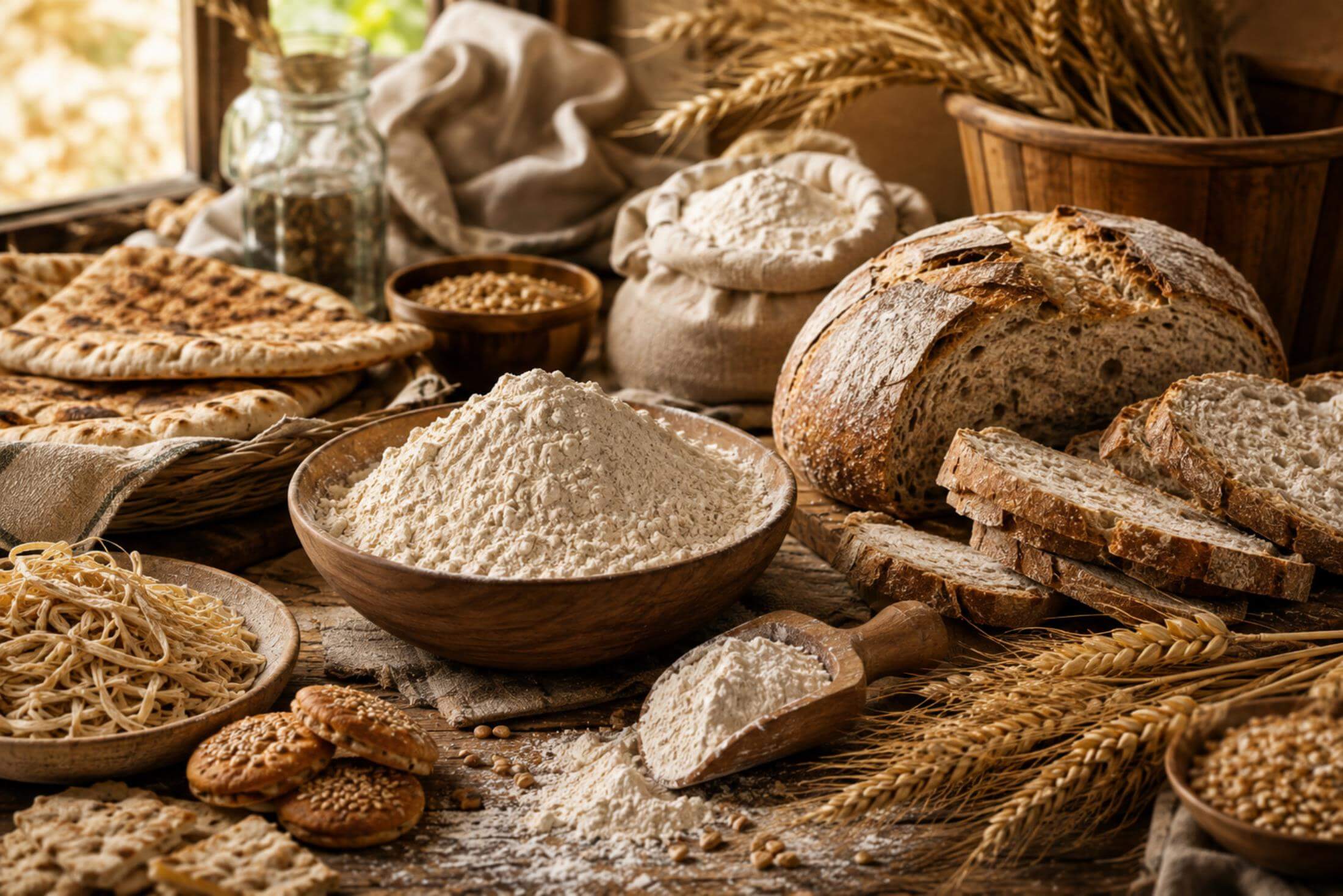
Some ingredients change more than the flavor of a recipe; they change its character. Siyez, known internationally as einkorn wheat, is one of those ingredients. Its warm grain aroma, lightly nutty taste, natural golden tone, and connection to Anatolian food culture give bread and pastries a distinctive identity.
Einkorn flour has attracted renewed interest because home bakers are looking for ingredients with a clear story and a less standardized flavor. It can be used in traditional recipes such as gözleme, bazlama, and erişte, but it also fits modern pancakes, crackers, rustic pizza, and vegetable tarts. The key is to understand that it does not behave exactly like modern white flour.
Traditional and Modern Recipes with Einkorn Flour
Quick Checklist
Traditional: gözleme, bazlama, and homemade erişte noodles.
Bread: country loaves and sourdough blends.
Breakfast: crepes and pancakes.
Snacks: thin crackers and savory cookies.
Modern applications: rustic pizza bases and vegetable tarts.
Einkorn flour gives dough a fuller grain flavor and a more rustic appearance. It may form a softer or more delicate gluten structure, depending on milling and blend. For this reason, aggressive kneading and direct one-to-one substitution do not always produce the best result.
What Is Einkorn Flour?
Einkorn is one of the oldest cultivated wheat species. In Türkiye, siyez is strongly associated with traditional agriculture and local food culture. The grain has a different genetic structure from modern common wheat and produces flour with a characteristic color and aroma.
It is important to clarify that einkorn contains gluten. It is not suitable for people with celiac disease and should not be presented as gluten-free. Individual tolerance and medical needs must be discussed with a qualified health professional.
From a culinary perspective, einkorn’s main attraction is flavor. It can bring notes described as nutty, lightly sweet, grassy, or earthy. These qualities are especially visible in simple recipes where the flour is not covered by excessive sugar or seasoning.
How Einkorn Flour Behaves in Dough
Einkorn flour can absorb liquid differently from standard white flour. The dough may feel soft, sticky, or fragile if the recipe is converted without adjustment. Adding too much flour to correct stickiness can make the final product dry.
Begin with partial substitution. Replace 20 to 40 percent of the flour in a familiar recipe and observe the result. This preserves some of the handling characteristics of the original dough while introducing einkorn flavor.
Use shorter or gentler mixing for cakes, cookies, and flatbreads. In bread, folds and resting can be more effective than aggressive kneading. Give the flour time to hydrate before deciding whether additional liquid or flour is necessary.
Traditional Recipe Ideas
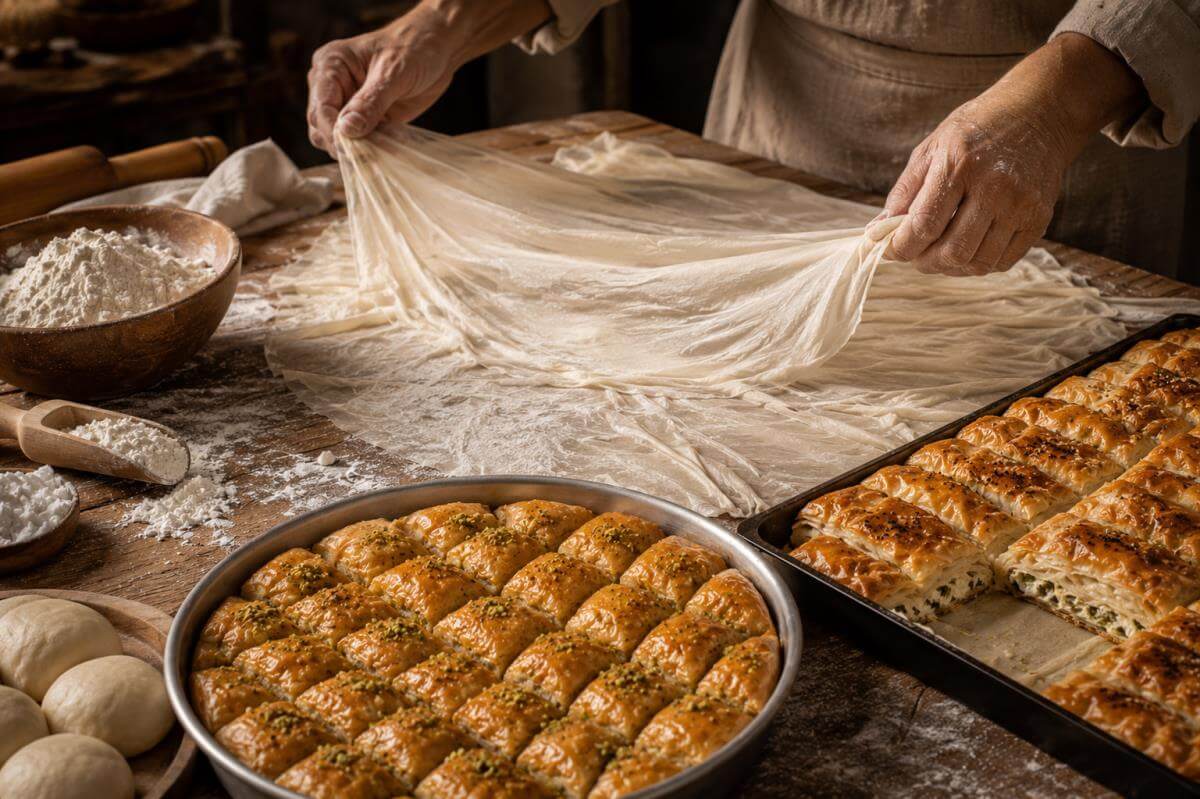
Einkorn Gözleme
Gözleme is a thin Turkish flatbread cooked on a griddle and often filled with cheese, herbs, potato, or minced meat. Einkorn flour adds a rustic aroma that works particularly well with greens and mild cheese.
Prepare a soft dough with einkorn flour, water, salt, and a small amount of oil. For easier rolling, blend einkorn with a stronger wheat flour. Rest the dough well, divide it into equal portions, roll thinly, add a cool and relatively dry filling, and cook on a hot surface.
Einkorn Bazlama
Bazlama is a soft, thick flatbread. Einkorn gives it a satisfying grain flavor, but the dough should remain moist. A blend with bread flour can improve volume and handling.
Use moderate hydration, allow full fermentation, and cook on a preheated griddle. Cover the breads after cooking if a softer crust is desired.
Homemade Einkorn Erişte
Turkish erişte is a cut noodle traditionally made with flour, eggs, water or milk, and salt. Einkorn creates a golden tone and nutty flavor.
The dough should be firm enough to roll and cut. Because einkorn dough may be more fragile, avoid rolling it excessively thin. Dust lightly, cut into strips, and dry thoroughly before storage.
Bread and Sourdough Applications
Einkorn can be used in bread, but a 100 percent einkorn loaf has a different structure from modern high-protein bread. Expect a more compact crumb, softer dough, and distinctive flavor.
For a lighter loaf, blend 20 to 50 percent einkorn flour with bread flour. This combination allows the modern flour to support volume while einkorn contributes aroma and color.
In sourdough, einkorn works well as part of the feed or final dough. Its minerals and whole-grain components can support fermentation activity, but the dough must be monitored carefully. Long fermentation can weaken a delicate structure if it is allowed to proceed too far.
Use a loaf tin when working with a high percentage of einkorn. The tin supports the dough and produces a more controlled shape.
|
Application |
Practical Approach |
|
Gözleme |
Use partial blending and allow enough resting for easy rolling |
|
Bazlama |
Keep the dough moist and ferment fully |
|
Erişte |
Prepare a firm dough and avoid rolling excessively thin |
|
Sourdough bread |
Blend with bread flour and monitor fermentation carefully |
|
Pancakes |
Use einkorn alone or in a blend; adjust liquid after a short rest |
|
Crackers |
Roll thin, dock the dough, and bake until dry and crisp |
Modern Recipe Ideas
Einkorn Pancakes
Einkorn’s gentle sweetness pairs well with yogurt, banana, cinnamon, honey, and fruit. Mix the batter and let it rest for five to ten minutes before judging thickness. The flour continues to hydrate during this time.
Cook small pancakes over medium heat. Very large pancakes may be harder to turn if the batter is delicate.
Thin Einkorn Crackers
Combine einkorn flour with olive oil, water, salt, and seeds. Roll the dough between sheets of baking paper, cut or score it, and prick the surface. Bake until the crackers are fully dry and crisp.
Rosemary, sesame, nigella seeds, cumin, and aged cheese all complement the flour’s flavor.
Rustic Pizza Base
Use einkorn as 20 to 30 percent of a pizza flour blend. This adds aroma without sacrificing the extensibility needed for shaping. The dough may color more quickly, so monitor baking closely.
Top with simple ingredients such as tomato, roasted vegetables, mushrooms, herbs, or mild cheese so the grain character remains noticeable.
Vegetable Tart
Einkorn works well in shortcrust pastry because a tender structure is desirable. Combine it with cold butter or olive oil, mix minimally, and rest the dough before rolling. Use a filling that is not excessively wet.
Tips for Better Texture
Start with Partial Substitution
Partial substitution is the safest way to learn the flour. It allows you to compare flavor, hydration, and texture without changing every variable at once.
Add Liquid Gradually
Einkorn flour from different mills and extraction levels may absorb differently. Hold back some liquid and add it according to the dough.
Avoid Overmixing
Overmixing can make delicate dough sticky or weak. Mix until the ingredients are combined, then use rest and gentle folds where appropriate.
Use Resting Time
Resting helps moisture distribute and makes rolling easier. Keep dough covered so the surface does not dry.
Expect a Different Result
Einkorn is not intended to imitate white flour perfectly. Its denser texture, deeper color, and aromatic flavor are part of its value. Adjust expectations to the ingredient rather than forcing it into a standard result.
Flavor Pairings That Work Well
Einkorn flour pairs naturally with:
Olive oil and butter.
Yogurt and mild cheese.
Walnuts, hazelnuts, and sesame.
Honey, grape molasses, and dried fruit.
Thyme, rosemary, nigella, and cumin.
Roasted vegetables and mushrooms.
Keep seasoning balanced. The flour’s flavor is easiest to appreciate in recipes with a short ingredient list.
Storage of Einkorn Flour
Because less-refined einkorn flour may contain more germ and bran, it can be more sensitive to heat and oxidation. Buy quantities you can use within a reasonable period.
Store the flour in a cool, dry, dark place in an airtight container after opening. For longer storage, refrigeration or freezing may be useful, but protect the flour from odors and condensation. Allow a closed container to return to room temperature before opening.
Check for rancid or musty odor, insects, and moisture before use.
Bringing Ancient Grain into a Modern Kitchen
Einkorn flour connects old and new. It can preserve the character of traditional Anatolian recipes while giving modern dishes a more distinctive grain flavor. The best results come from respecting its behavior: adjust hydration, mix gently, rest the dough, and use blends when more strength is needed.
Özmen Un’s product approach encourages users to select flour according to application. When exploring einkorn or other whole-grain options, this same principle remains valuable: understand what the flour brings and design the recipe around it.
|
Explore Özmen Un flour varieties and find options for traditional and modern grain-based recipes. |
Frequently Asked Questions About Einkorn Flour
Is einkorn flour gluten-free?
No. Einkorn is a wheat species and contains gluten. It is not suitable for people with celiac disease or anyone instructed to avoid gluten completely.
Can einkorn flour replace white flour one to one?
Sometimes in simple recipes, but the texture and hydration will change. Begin with partial substitution and adjust liquid after allowing the dough or batter to rest.
What can be made with einkorn flour?
It can be used in gözleme, bazlama, erişte, bread blends, sourdough, pancakes, crackers, cookies, rustic pizza, and tart dough.
Why does einkorn dough feel sticky or fragile?
Its protein structure and water behavior differ from modern bread flour. Avoid immediately adding large amounts of flour; use resting, gentle handling, and blending with stronger flour when necessary.