Flour Color and Structure in Pastry and Baklava
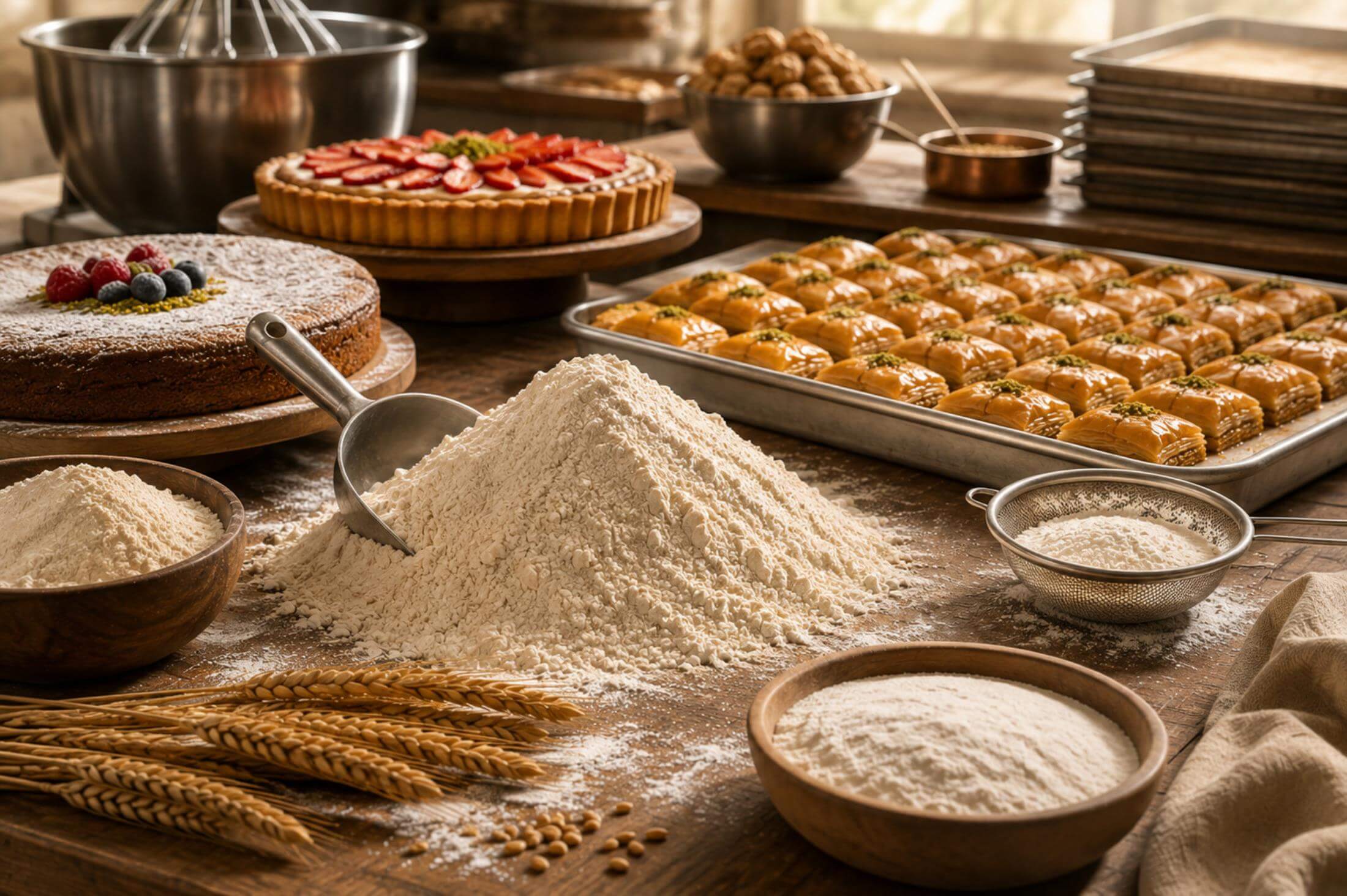
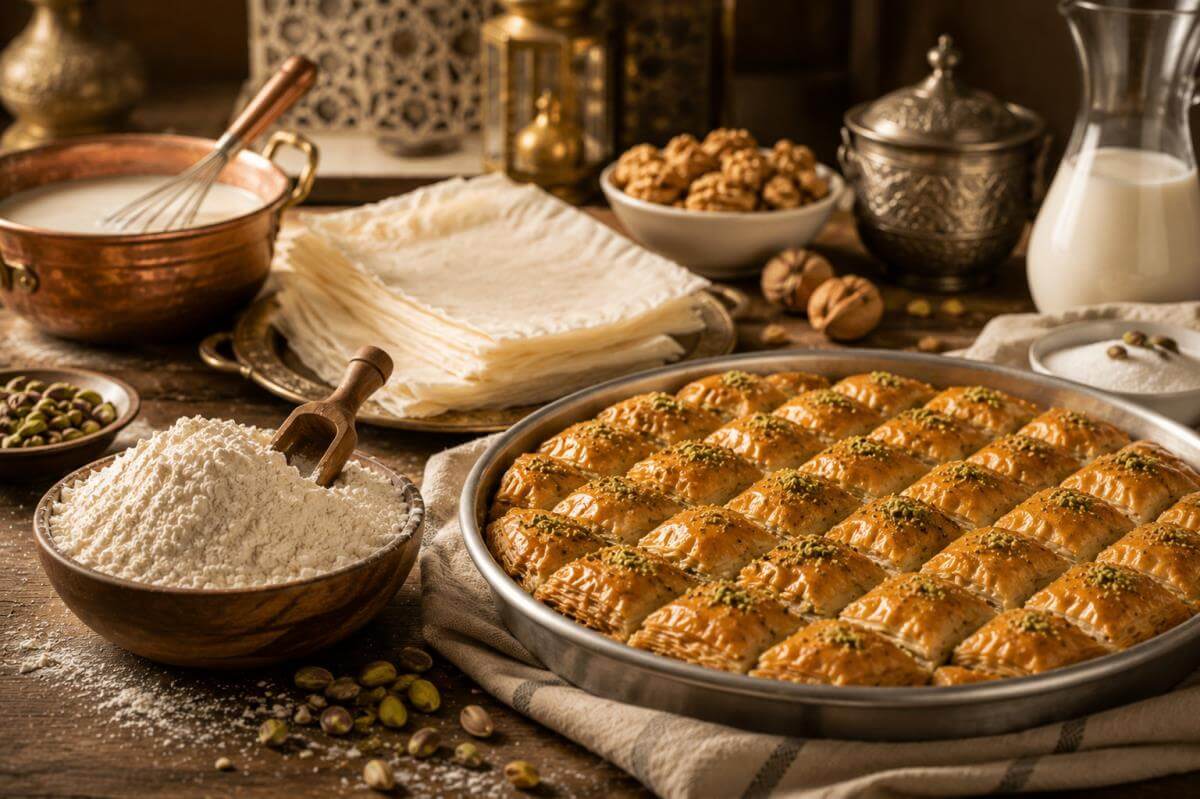
The first message a tray of baklava gives when it leaves the oven is visual. Golden layers, clean edges, and a surface that suggests crispness create an expectation before the first bite. In a pastry shop, color and structure are equally important: a sponge cake should look light and even, a cookie should appear delicate rather than dense, and tart dough should bake into a clean, stable shell.
Flour selection is therefore not a minor recipe detail. Color, ash level, protein quality, elasticity, water absorption, and milling consistency all influence how a product is processed and how it appears after baking. At Özmen Un, we consider the way flour behaves on the bench as important as its laboratory values. Good flour reveals itself not only in an analysis report, but in how smoothly the dough mixes, rolls, holds shape, and responds to heat.
Pastry and Baklava Flour: Color and Structure
Quick Checklist
Sponge cake: fine, tender crumb with limited gluten development.
Cookies: crisp or short texture with controlled water binding.
Tart dough: enough structure to hold its shape without becoming tough.
Baklava: suitable ash level, clear color, fine opening, and syrup resistance.
For every product, milling fineness and protein balance should be considered together.
Baklava and general pastry products are often discussed under one broad category, yet they require very different dough behavior. Baklava demands extensibility and strength at extreme thinness. Cakes and cookies usually need lower or more controlled gluten development so that the texture remains tender.
This difference explains why “good flour” is not a universal definition. Flour is good when it is appropriate for the product and consistent in production.
How Flour Color Affects Product Quality
Flour color influences the appearance of dough and the baked product. In baklava, a clean, pale dough helps the final layers develop an attractive golden tone. In white cakes, cookies, and certain pastries, a bright flour can support a refined visual result. In rustic products, a creamier or darker tone may be desirable and communicate whole-grain character.
Color is connected to wheat variety, extraction rate, bran particles, ash content, storage, and milling. It should not be judged in isolation. Extremely white flour does not automatically perform better, and naturally creamy flour is not necessarily lower quality.
Professional producers should define the target color for the finished product and evaluate flour accordingly. A baklava line focused on a clear golden appearance may require a different flour profile from a biscuit designed to look rustic or a cocoa cake where flour color has little visible effect.
Color consistency between batches is as important as the target itself. Even small changes can be noticeable when products are displayed side by side. Standardized raw-material selection and milling help reduce this variation.
Ash Content: A Critical Value for Color and Standardization
Ash is the mineral residue remaining after a flour sample is burned under controlled laboratory conditions. It provides an indication of the amount of material originating from the outer parts of the wheat kernel. In general, a higher extraction rate and more bran-related particles are associated with higher ash.
In baklava and light-colored pastry, a suitable low ash level may support a brighter dough and cleaner appearance. However, ash is not merely a color number. It can also relate to flavor, fermentation nutrients, and the intended style of the product.
The correct ash level should be defined according to use. A very low-ash flour may be suitable for fine sheets, while whole-grain bread intentionally contains more mineral-rich outer layers. Purchasing teams should therefore avoid treating the lowest number as automatically superior.
Consistency matters. If ash varies significantly from batch to batch, the bakery may see changes in dough color, baked tone, water behavior, and product appearance. A reliable supplier monitors this parameter within the specification established for each product.
Protein Structure: Behavior Matters as Much as Strength
Protein content is one of the most familiar flour specifications, but the percentage alone cannot describe dough behavior. When flour meets water, its proteins form gluten. The quality, balance, and interaction of these proteins determine whether the dough stretches, springs back, tears, or holds gas.
Baklava flour needs a controlled balance. The dough must be strong enough to survive rolling and lifting, but not so elastic that it constantly shrinks. Cake flour needs far less gluten development because a strong network can make the crumb tough. Cookie and tart applications also require carefully controlled structure.
For baklava, extensibility is often as important as elasticity. Extensibility allows the sheet to widen; elasticity helps it recover. Too much recovery makes the dough difficult to open. Too little strength causes tearing.
In professional trials, observe more than mixing time. Check the dough after resting, during rolling, at the edges of the sheet, and after baking. These practical observations reveal how the protein structure behaves in the actual process.
The Difference in Pastry Flour: Texture and Baking Balance
Pastry flour is generally designed to create a tender structure rather than a chewy one. In cakes, it should support fine, even gas cells without encouraging excessive gluten. In cookies, it should allow fat and sugar to produce a short, crisp bite. In tart shells, it must offer enough structure to hold shape while remaining delicate.
Mixing method becomes critical. Even suitable pastry flour can produce a tough cake if it is mixed aggressively after the liquid is added. Flour should be incorporated only until the batter is homogeneous. In cookie and tart dough, overworking develops gluten and changes the intended texture.
Particle size and uniformity also matter. Fine, homogeneous flour blends more evenly with sugar, fat, eggs, and leavening. Lumps or uneven particles may create inconsistent hydration and visible defects.
Baklava flour, by contrast, is expected to tolerate more kneading and extensive rolling. This is why pastry flour and baklava flour should not be treated as identical, even though both are used in products sold by a patisserie.
Water Absorption: The Quiet Factor Behind Recipe Consistency
Water absorption determines how much liquid flour can take up while reaching a target dough consistency. A change in absorption can affect yield, mixing, resting, and handling.
In baklava, too little water creates a dry dough that cracks. Too much water produces stickiness and requires excessive starch during rolling. In cakes, absorption influences batter viscosity and crumb. In cookies, it affects spread and hardness.
Professional producers should avoid fixing every variation by changing the recipe informally. Instead, compare flour data, dough temperature, ingredient condition, and mixing parameters. A structured adjustment protects consistency and makes it possible to identify the real cause.
|
Criterion |
Effect on Production |
|
Balanced protein structure |
Helps baklava dough roll thin without tearing |
|
Controlled elasticity |
Allows the sheet to widen without excessive snap-back |
|
Suitable ash level |
Influences flour color and the baked appearance |
|
Stable water absorption |
Supports similar consistency from batch to batch |
|
Homogeneous structure |
Contributes to smooth rolling and even baking |
Rollability: The Difference a Baklava Master Feels
Rollability is a practical combination of hydration, protein behavior, resting, and milling. A skilled baker notices it immediately. Suitable dough becomes smoother as it is kneaded, relaxes after resting, and opens evenly with less force.
Poor rollability appears as shrinking, uneven thickness, cracked edges, sticking, or sudden tearing. These problems can also come from technique, but if they occur repeatedly across operators, flour should be evaluated.
Resting should be standardized. If one batch needs 30 minutes and another needs 90 minutes to become workable, production planning is affected. Stable flour reduces this uncertainty.
During trials, measure more than the final sheet diameter. Record mixing time, dough temperature, rest time, starch usage, sheet thickness, tearing frequency, and labor effort. These details turn a subjective impression into useful purchasing data.
Baking Performance: Color, Layers, and Mouthfeel
In baklava, the oven must dry the inner layers while developing an even golden color. Flour influences how the sheets set, separate, and respond to syrup. If the structure is weak, the layers may compress. If the dough is too tough, the bite may feel hard rather than crisp.
In pastry, baking performance appears in volume, spread, edge definition, crumb, and tenderness. A cake that rises unevenly, a cookie that spreads excessively, or a tart shell that shrinks can all indicate an imbalance between flour, recipe, and process.
Product evaluation should include the condition after cooling and, where relevant, after syruping or storage. Baklava that is crisp immediately but turns doughy too quickly may not meet the commercial target. Cookies that seem tender when hot may become hard once fully cooled.
Practical Checks Used by Experienced Bakers
1. Observe the Initial Dough Formation
Does the flour absorb liquid evenly? Does the dough become smooth, or remain rough and patchy? The first stage often predicts later handling.
2. Evaluate the Dough After Resting
A suitable dough should relax without losing all its strength. Compare elasticity, surface smoothness, and ease of dividing.
3. Check the Edges During Rolling
Cracks, jagged edges, and repeated tearing indicate dryness, insufficient relaxation, or unsuitable extensibility.
4. Compare Color and Texture After Baking
Use the same oven conditions and pan. Evaluate top and bottom color, layer separation, crumb, crispness, and mouthfeel.
5. Monitor Batch Consistency
Keep records. A strong first sample is not enough; the approved product must perform consistently across deliveries.
Flour Selection for Professional Purchasing Teams
Purchasing decisions should include both technical and operational criteria. The flour must fit the product, but it must also be available in the required volume, arrive on time, remain stable in storage, and be supported when questions arise.
Ask for specifications and samples, then conduct trials under real production conditions. Include production and quality teams in the evaluation. A flour that looks attractive commercially but increases labor or waste may cost more in practice.
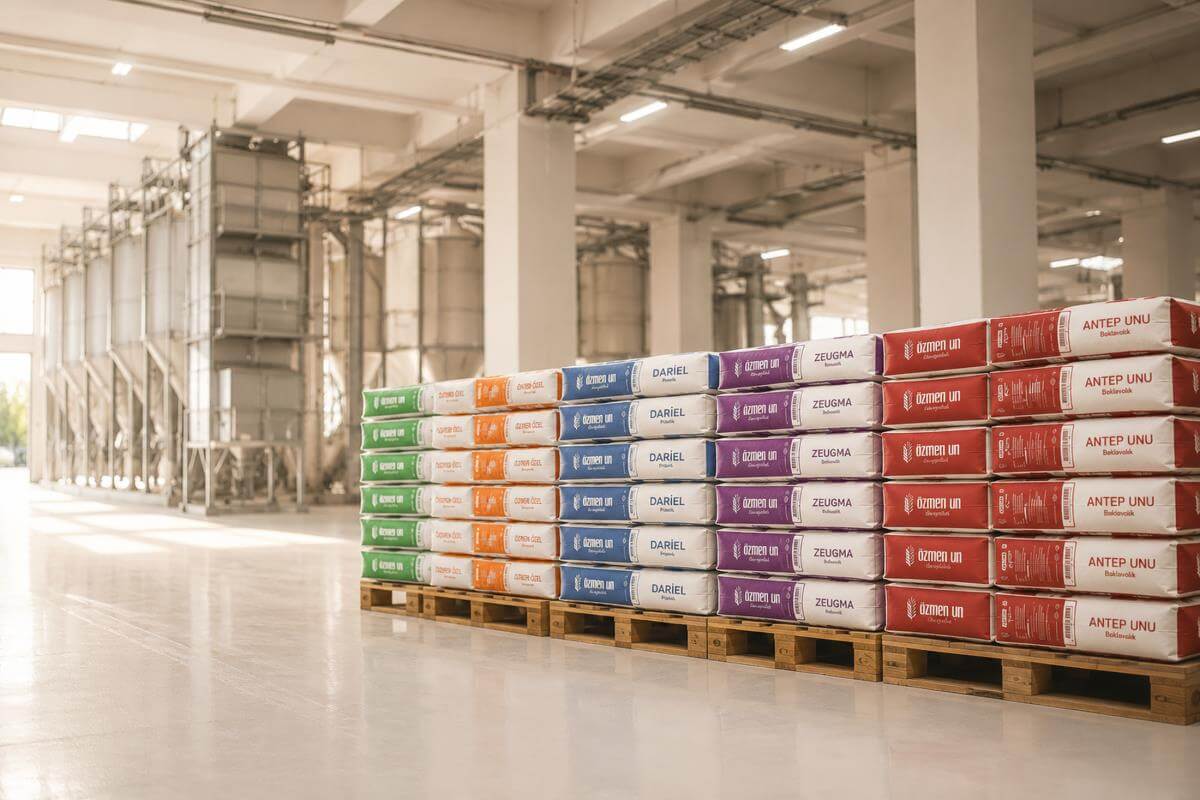
Özmen Un offers flour groups developed for different applications, helping professional producers select according to the actual process. For pastry and baklava, this means evaluating color, structure, opening behavior, and finished-product performance together.
The Right Flour Supports Craftsmanship
Flour cannot replace the experience of a master baker, but it can either support or obstruct that experience. Appropriate flour allows the dough to respond predictably, helping the baker focus on thickness, layering, butter, filling, and baking rather than fighting inconsistency.
In pastry and baklava, where appearance and texture are inseparable, flour color and structure should be treated as strategic quality parameters. A disciplined selection process protects the product, the labor behind it, and the customer’s expectation.
Frequently Asked Questions About Pastry and Baklava Flour
What should baklava flour be like?
It should offer controlled elasticity, good extensibility, fine and homogeneous milling, stable water absorption, and a color profile suitable for clear, golden layers.
Are pastry flour and baklava flour the same?
No. Pastry flour generally supports tender cakes, cookies, and tarts with limited gluten development. Baklava flour must tolerate kneading and extreme rolling without tearing or excessive snap-back.
Why is flour color important in baklava?
Flour color affects the appearance of raw sheets and the final baked tone. Consistent, suitable color helps producers achieve the expected clear, golden presentation from batch to batch.
Why does baklava dough tear while rolling?
Possible causes include insufficient hydration, inadequate kneading or resting, excessive drying, uneven pressure, or flour whose protein balance does not provide enough extensibility.