Why Poğaça and Açma Fail to Rise: The Role of Flour
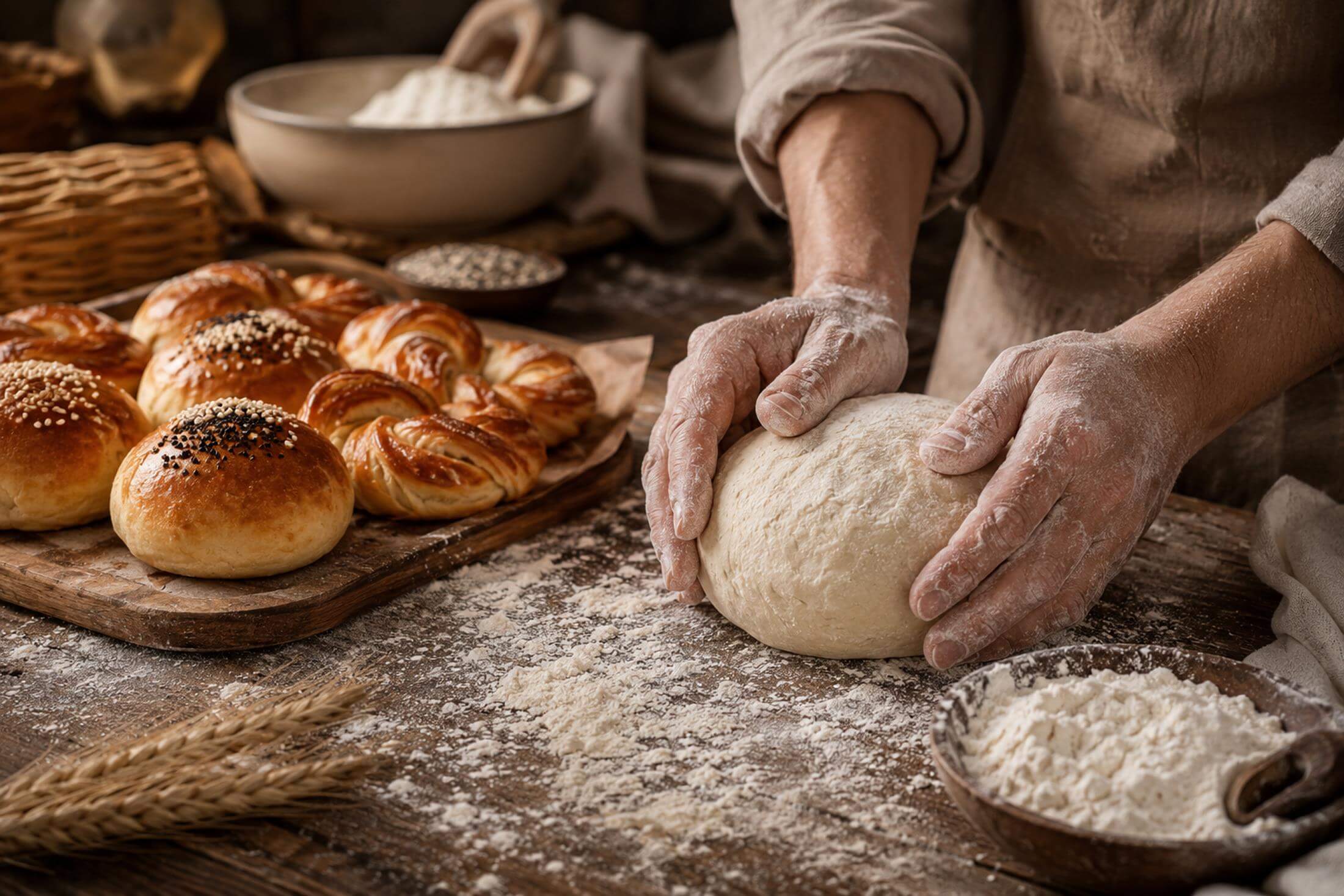
Making poğaça, the soft and savory Turkish pastry served at breakfast and tea time, is one of the most comforting rituals in a home kitchen. As the dough is kneaded, the scent of yeast begins to fill the room; when the tray goes into the oven, everyone waits for those smooth, golden pastries to rise. Yet the result is not always what we imagine. Sometimes the dough barely expands, sometimes the pastries come out dense, and sometimes an açma, the buttery Turkish breakfast roll that should separate into soft strands, tears while being shaped.
When this happens, attention usually turns to the yeast, the oven, or the resting time. All of these matter, but they are only part of the story. Flour forms the structure that allows the dough to rise, stretch, retain moisture, and keep its shape in the oven. In other words, yeast can produce gas, but only a suitable flour can hold that gas long enough to create volume. At Özmen Un, we know that reliable pastry results begin not only with a good recipe, but with flour whose character matches the product you want to make.
Why Do Poğaça and Açma Fail to Rise?
Quick Checklist
Make sure the yeast is fresh and active.
Use milk or water at a comfortably warm temperature, not hot enough to weaken the yeast.
Do not add all the flour at once; judge the consistency as kneading progresses.
Allow enough time for both bulk fermentation and the final proof on the tray.
Preheat the oven fully before baking.
Choose flour with a balanced protein structure that is suitable for enriched yeast doughs.
The first thing to understand is that rising is a chain of events. Yeast feeds on available sugars and releases carbon dioxide. The dough then needs a flexible network capable of trapping those tiny gas bubbles. If the network is too weak, the gas escapes. If it is excessively tight, the dough resists expansion. A well-balanced flour creates a structure that can stretch without collapsing.
Temperature can also interrupt this chain. Liquid that is too hot may damage the yeast, while very cold ingredients slow fermentation considerably. A cold kitchen may require more time, whereas a warm environment can make the dough rise too quickly and lose strength before it reaches the oven. The clock is therefore only a guide; the volume, surface, and feel of the dough are more reliable indicators.
Another common problem is adding too much flour. Enriched doughs contain milk, eggs, butter, or oil, and they often feel soft and slightly sticky at the beginning. When extra flour is added immediately to make the dough easier to handle, the final structure becomes dry and heavy. The dough may appear neat on the counter, but it no longer has enough moisture to expand freely.
Why Flour Quality Matters
Flour is not simply the ingredient that brings everything together. It determines how much liquid the dough can absorb, how it behaves during kneading, how it responds to fermentation, and how soft the final pastry remains after cooling.
It Controls Dough Elasticity
When wheat flour meets liquid and is kneaded, its proteins form gluten. This network gives dough both elasticity and extensibility. Elasticity helps the dough hold its shape; extensibility allows it to stretch as gas accumulates. For poğaça and açma, the balance between the two is especially important. A dough that is too weak spreads on the tray, while a dough that is too strong pulls back during shaping and may feel rubbery after baking.
A suitable flour should allow the dough to become smooth and supple without requiring excessive kneading. After resting, it should be easy to divide and shape, and it should not crack around the edges. When making açma, the dough must also tolerate rolling, twisting, and coiling without tearing.
Water Absorption Determines Consistency
Every flour absorbs water differently. Two recipes prepared with the same measured amount of liquid can produce completely different doughs because the flours do not have the same absorption capacity. Flour with stable water absorption makes it easier to repeat the recipe and maintain a soft texture.
This is why liquids should be added with attention rather than mechanically. The dough should be soft, smooth, and slightly tacky, but not so loose that it cannot hold its shape. It should release from the bowl gradually as the gluten develops. If it becomes stiff from the beginning, the baked pastries are likely to be dense.
It Supports Fermentation and Baking Performance
During fermentation, flour must carry the expanding gas cells without losing its structure. In the oven, heat causes a final burst of expansion before the crust sets. This is sometimes called oven spring. If the flour cannot support the dough, the pastries may rise during proofing but flatten or remain small during baking.
Consistent flour performance is also important after the pastries leave the oven. A balanced dough retains moisture more effectively and stays tender for longer. This does not mean that flour alone determines shelf life, but it creates the foundation on which fat, liquid, fermentation, and storage can work together.
How Should You Choose Flour for Poğaça?
The best flour for poğaça is not necessarily the flour with the highest protein number. It should have enough strength to support fermentation, but it must also produce a tender bite. Very strong bread flour can make the pastry overly chewy, while very weak cake flour may not hold the gas created by the yeast.
Look for flour intended for pastry, börek, or multipurpose use, especially one that performs well in soft yeast doughs. A moderate and consistent protein structure, fine milling, good absorption, and predictable handling are more useful than a single number on the label.
The recipe also affects the choice. A plain milk-based poğaça may need less strength than a rich açma containing butter and eggs. Heavy fillings, such as cheese, olives, or minced meat, also place additional pressure on the dough. The flour must allow the pastry to rise while carrying the filling without becoming gummy around the center.
Özmen Un’s product approach is based on matching flour to the intended use. For home bakers, understanding that different recipes need different flour behavior makes every stage more manageable, from mixing to shaping and baking.
Troubleshooting Dough That Does Not Rise
|
Problem |
Likely Cause |
What to Do |
|
The dough does not rise at all |
Inactive yeast or liquid at the wrong temperature |
Check the yeast and use comfortably warm liquid |
|
The dough rises but does not expand in the oven |
Weak dough structure or poor gas retention |
Use flour suited to enriched yeast pastries and proof correctly |
|
Poğaça comes out hard |
Too much flour, insufficient resting, or overbaking |
Add flour gradually and review proofing and baking time |
|
The dough tears during shaping |
Weak elasticity or insufficient resting |
Knead until smooth, then allow the dough to relax |
|
The pastries dry out quickly |
Low moisture balance or unsuitable storage |
Keep the dough soft and store cooled pastries in an airtight container |
|
Açma spreads on the tray |
Dough is too loose or final proof is uncontrolled |
Adjust the liquid-flour balance and shape with gentle tension |
Troubleshooting becomes easier when you observe the dough at every stage. If it is dry before fermentation, baking will not make it soft. If it spreads before going into the oven, it is unlikely to develop a tall, even shape. Each stage gives you information that can be used before the final result is fixed.
Tips for Softer Poğaça and Açma
Do Not Add Flour All at Once
Hold back a small portion of the flour and add it only if needed. Humidity, egg size, and the temperature of the ingredients all influence the final consistency. A recipe is a map, but the dough itself tells you when it has enough flour.
Keep Kneading in Balance
Under-kneaded dough cannot form a strong enough network, but excessive kneading can overheat enriched dough and make the butter separate. Knead until the surface becomes smoother and the dough can stretch without tearing immediately. A short rest during kneading can help the flour hydrate and reduce the need for aggressive handling.
Judge Fermentation by the Dough, Not Only by Time
The dough should visibly increase in volume and feel lighter when touched. During the final proof, the shaped pastries should become puffy and respond slowly to gentle pressure. If they spring back instantly, they may need more time. If the indentation remains deep and the dough feels fragile, they may be overproofed.
Pay Attention to Liquid Temperature
Warm does not mean hot. Milk or water should feel pleasantly warm to the touch. If you use eggs, yogurt, or butter directly from the refrigerator, they can cool the dough and slow the yeast. Bringing ingredients closer to room temperature helps fermentation proceed more evenly.
Control the Baking Temperature
A properly preheated oven helps the pastries expand quickly and set their shape. A low oven can cause the dough to spread before the structure firms up. Excessive heat, on the other hand, colors the outside too fast while leaving the interior dense. Bake until the surface is evenly golden, then remove the tray before the pastries lose too much moisture.
Flour Has an Even Bigger Role in Açma Dough
Açma is expected to be soft, rich, and capable of separating into delicate strands. This texture comes from both the fat layers and the dough’s ability to stretch. During shaping, the dough is rolled, lengthened, twisted, and often coiled. Flour with inadequate elasticity tears, while flour with excessive resistance makes the process tiring and produces a tight crumb.
Resting is especially important. After dividing the dough, allow the portions to relax before stretching them. This gives the gluten time to loosen, making the dough easier to lengthen without forcing it. If butter or oil is incorporated during shaping, use it evenly so that the layers separate without making the dough greasy or unstable.
Why Does Poğaça Become Hard?
Hardness may come from several causes: too much flour, too little fat or liquid, inadequate proofing, excessive baking, or leaving the pastries uncovered after cooling. Flour choice affects all of these. A flour that absorbs more liquid may need a slightly different ratio, while a flour that develops strong gluten may require gentler kneading.
Do not bake the pastries simply until they look dark. A light, even golden color is usually enough. Once they leave the oven, let steam escape briefly, then cover them loosely with a clean cloth if you prefer a softer crust. After they cool completely, store them in an airtight container.
Learn to Read the Dough for More Consistent Results
Successful baking becomes easier when you stop expecting every batch to behave exactly according to the clock. Notice how the dough feels when it first comes together, how much it relaxes after resting, how it responds to shaping, and how quickly it rises in your kitchen. These observations help you adapt to seasonal changes and small differences between ingredients.
A good dough should feel alive but controlled. It should stretch, recover, and hold gentle tension. When the flour is suitable, the baker does not have to fight the dough. Instead, each stage supports the next: mixing leads to smooth kneading, kneading leads to stable fermentation, and fermentation leads to a light final pastry.
The Right Flour Means More Reliable Pastries
Soft poğaça and strand-like açma are not created by a single trick. They are the result of active yeast, balanced moisture, sufficient resting, correct oven temperature, and flour that can support the entire process. Once these elements work together, the recipe becomes easier to repeat and the result becomes far more predictable.
Özmen Un offers flour varieties developed for different areas of use, helping home bakers choose a product that matches the needs of their recipe. Understanding flour behavior is one of the most valuable steps toward producing pastries that rise well, remain tender, and bring the familiar warmth of a Turkish bakery to the home kitchen.
|
Explore Özmen Un flour options for soft, well-risen poğaça and açma. |
Frequently Asked Questions About Poğaça and Açma
Why does poğaça dough fail to rise?
The most common causes are inactive yeast, liquid that is too hot or too cold, insufficient proofing, too much flour, or flour that cannot retain the gas produced during fermentation. Check the yeast first, then evaluate the dough’s softness and the room temperature.
Which flour should be used for poğaça?
Choose a flour with a balanced protein structure that is suitable for soft, enriched yeast pastries. Multipurpose, pastry, or börek-style flour can work well when it offers stable absorption and enough strength to support fermentation without making the crumb chewy.
Why does poğaça become hard?
Poğaça can become hard when too much flour is added, the dough is not proofed sufficiently, it is baked for too long, or it is stored uncovered. Keeping the dough soft and removing the pastries from the oven once evenly golden helps preserve tenderness.
Why does açma dough tear during shaping?
Tearing usually indicates insufficient gluten development, inadequate resting, or an unsuitable flour structure. Knead until smooth, let the divided dough relax, and stretch it gradually rather than pulling it forcefully.