Professional Bread at Home: Flour Selection and Tips
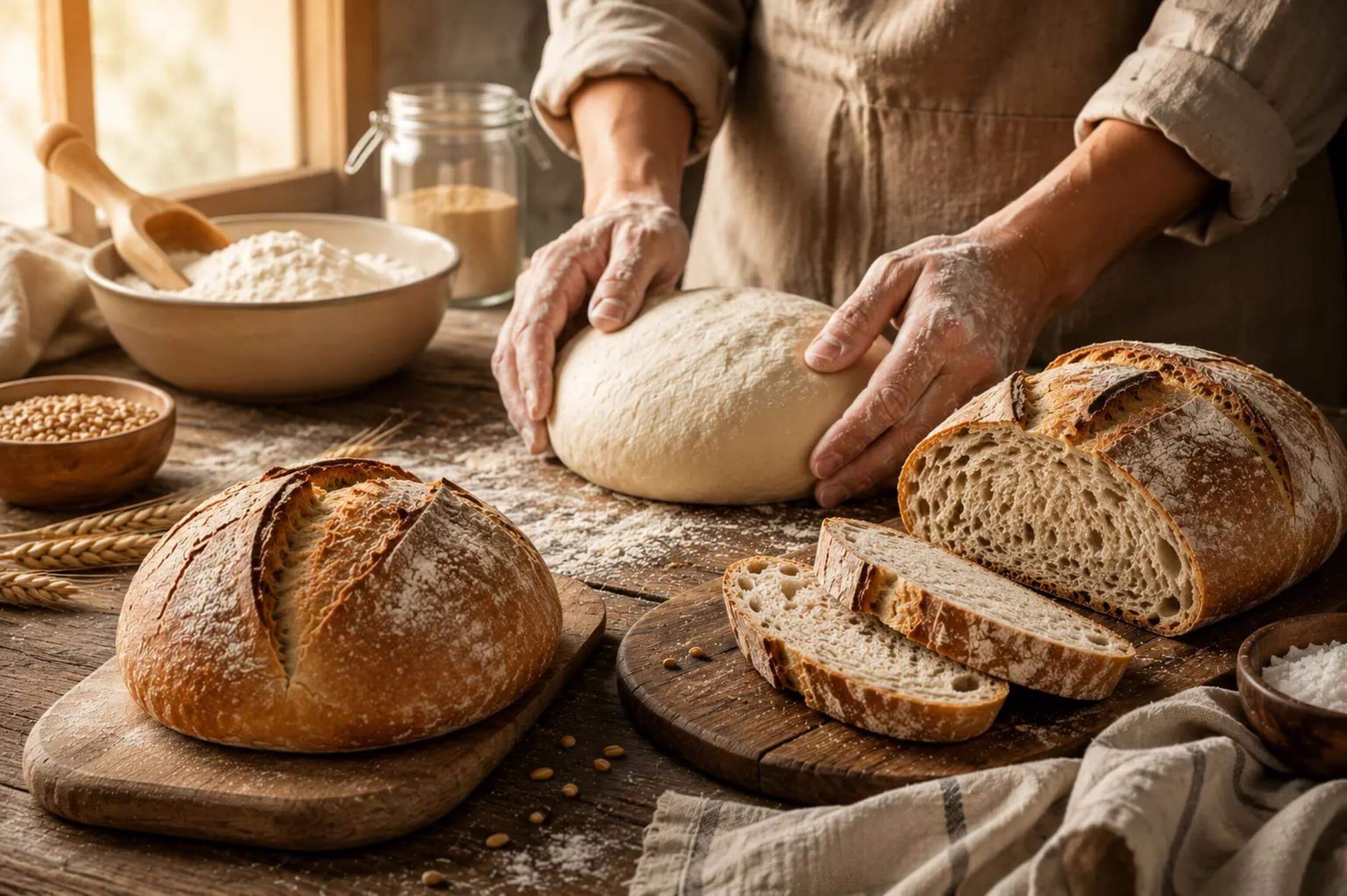
Baking bread at home begins with a few simple ingredients, yet it quickly becomes a craft that rewards observation and patience. Flour, water, yeast, and salt may look identical from one recipe to another, but the loaves that emerge from the oven can be completely different. One may rise beautifully with a thin, crisp crust; another may remain dense, spread sideways, or feel gummy inside. The difference often lies less in the written recipe than in the flour, dough temperature, fermentation, shaping, and baking technique.
You do not need an expensive professional oven to make impressive bread at home. What matters most is learning how the dough behaves and choosing flour that can support the style of bread you want to produce. Bread flour gives the dough strength, holds the gas created during fermentation, supports oven spring, and shapes the crumb. At Özmen Un, we believe a good loaf begins with the journey of wheat itself, from careful selection and milling to the moment flour meets water in the kitchen.
Essential Tips for Professional Bread at Home
Quick Checklist
Use strong, balanced bread flour for a classic loaf.
Blend more aromatic flours carefully when making rustic or country-style bread.
Keep both softness and elasticity in balance for pide, bazlama, and sandwich breads.
Knead until the dough is smooth, but avoid overheating it.
Judge fermentation by volume, bubbles, and texture rather than by the clock alone.
Preheat the oven and, when used, a Dutch oven or baking stone thoroughly.
Professional-looking bread is the result of many small decisions. Flour determines the potential, but water activates it. Kneading organizes the dough structure, fermentation develops flavor, shaping gives direction, and heat transforms the dough into a finished loaf. If one stage is rushed, the next stage has to compensate.
What Is Bread Flour?
Bread flour is flour designed to provide the strength, elasticity, and gas retention needed in yeast-leavened doughs. When flour is mixed with water, two main wheat proteins combine to form gluten. This network stretches around the carbon dioxide produced by yeast, creating the cells that later become the crumb.
A useful bread flour should not be judged only by a high protein percentage. The quality of that protein, its balance between strength and extensibility, and the flour’s water absorption are equally important. Dough must be strong enough to hold its shape, yet flexible enough to expand. Flour that is too weak creates a flat, fragile loaf. Flour that is excessively strong can produce tight dough that is difficult to shape and slow to open in the oven.
Different breads also ask for different qualities. A long-fermented artisan loaf needs more tolerance than a quick sandwich bread. A soft bazlama requires a different texture from a chewy bagel. A rustic whole-grain loaf benefits from aromatic flour, but the bran in that flour can interrupt the gluten network. The most useful question is therefore not “Which flour is strongest?” but “Which flour is suitable for this bread and this fermentation method?”
Why Protein Content Matters
Protein content provides a practical clue about how flour may behave, although it never tells the whole story. In general, higher-protein flour has a greater potential to form gluten and absorb water. This is valuable for breads that need volume, chew, or long fermentation.
When the protein level is too low, the dough may feel soft but fail to retain gas. It may rise in the bowl, then collapse during shaping or baking. When the flour is appropriate, the dough becomes smoother during mixing, develops tension, and can be stretched into a thin membrane without tearing immediately. Bakers often call this the windowpane test.
Protein also influences hydration. Stronger flour can usually handle more water, which supports a moist crumb and larger holes. However, adding more water simply because a recipe mentions high hydration is not always wise. The correct amount is the amount your flour can absorb while still producing dough that you can manage.
|
Criterion |
Effect on Bread |
|
Protein structure |
Influences elasticity, gas retention, volume, and crumb |
|
Water absorption |
Determines how much water the dough can hold while remaining stable |
|
Gluten development |
Supports shaping, fermentation tolerance, and oven spring |
|
Intended use |
Different breads require different strength and extensibility |
|
Freshness and storage |
Affect aroma, consistency, and baking performance |
Dough Consistency: The Quiet Indicator of Good Bread
Dough consistency tells you more than the recipe alone. At the beginning, the mixture may look rough and sticky. As flour hydrates and gluten develops, it becomes more cohesive. A well-balanced dough should feel elastic, slightly tacky, and alive, rather than dry or stiff.
Avoid correcting stickiness with large amounts of additional flour. Many bread doughs become easier to handle after a short rest because flour continues absorbing water. The autolyse method uses this principle: flour and water are mixed and rested before yeast and salt are fully incorporated. This pause encourages hydration and allows gluten to begin forming with less kneading.
Temperature also affects consistency. Warm dough ferments faster and may become sticky as it weakens. Cold dough develops slowly and can feel tight. For most home breads, aiming for a moderate final dough temperature gives the baker more control.
Balancing Kneading and Resting
Kneading aligns and strengthens the gluten network. It can be done by hand, with a mixer, or through a series of folds. The goal is not to punish the dough, but to help it organize itself.
Hand kneading offers direct feedback. At first the dough sticks and tears; gradually it becomes smoother and more elastic. With a mixer, watch the dough rather than relying only on a fixed number of minutes. Stop if the dough becomes excessively warm, shiny, or begins to lose structure.
Resting is just as important as kneading. A short rest allows moisture to distribute and gluten to relax. This makes the dough easier to shape and reduces the temptation to add more flour. During bulk fermentation, folds can strengthen the dough without intensive kneading.
Fermentation: Where Flavor and Aroma Develop
Fermentation is not merely the stage when dough becomes larger. Yeast and naturally occurring enzymes transform the dough, developing aroma, acidity, color, and texture. A fast rise may produce volume, but a controlled fermentation creates a more complex loaf.
Use time as a reference, not a strict command. The same dough may need one hour in a warm summer kitchen and much longer in winter. Look for visible expansion, bubbles under the surface, a lighter feel, and a dough that holds gentle tension.
Overfermented dough becomes weak, overly sticky, and difficult to shape. Underfermented dough feels tight and produces a dense crumb. Learning to recognize the middle point is one of the most valuable bread-baking skills.
Cold fermentation in the refrigerator can extend flavor development and make the schedule easier to manage. After shaping, a loaf can rest overnight and be baked the next morning. The cold dough is also easier to score cleanly.
Strengthen Dough with Folding
Folding is especially useful for wetter doughs. During bulk fermentation, lift one side of the dough gently, stretch it upward, and fold it over the center. Repeat from the other sides. This redistributes temperature, organizes the gluten network, and traps air without knocking all the gas out.
Three or four folding sessions at intervals can transform a loose dough into a smooth, resilient mass. The exact number depends on the flour, hydration, and fermentation speed. Stop when the dough has enough strength to hold its shape; excessive folding can make it too tight.
Baking Technique: Crust, Volume, and Crumb
A fully preheated oven is essential. Bread needs strong initial heat to expand before the crust sets. A Dutch oven is popular because it traps steam released by the dough. Steam keeps the surface flexible during the first part of baking, allowing maximum oven spring and helping create a thin, glossy crust.
If you do not have a Dutch oven, a baking stone or steel can improve heat transfer. Steam can be introduced with a preheated tray and hot water, provided this is done safely and according to the oven manufacturer’s instructions.
Scoring gives expanding gas a controlled path. Use a sharp blade and make a decisive cut. A shallow decorative score and a deeper expansion score serve different purposes. The angle and depth can influence how the loaf opens.
Once the bread is baked, resist cutting it immediately. The crumb is still setting and moisture is redistributing. Cutting a hot loaf can make the interior seem gummy even when it is fully baked. Allow at least an hour for a medium loaf, and longer for a large or whole-grain loaf.
Better Bread Results with Özmen Un
Consistency is one of the biggest challenges in home bread baking. A flour that behaves predictably makes it easier to repeat the same recipe, adjust hydration, and understand the effects of fermentation. Özmen Un offers product groups designed for different baking needs, including bread, high-protein applications, and traditional oven products.
The value of choosing flour by intended use is that it reduces guesswork. A flour developed for bread is expected to support gas retention and fermentation. A high-protein flour can be useful when the dough contains more water or ferments for longer. A flour intended for stone-oven products may offer the balance needed for pide, bazlama, and rustic loaves.
Common Mistakes When Baking Bread at Home
Adding Too Much Flour
Sticky dough does not always mean the recipe has failed. Give the flour time to hydrate, use damp or lightly oiled hands, and rely on folding. Extra flour can turn an open, moist crumb into a dry, dense one.
Following the Clock Instead of the Dough
Fermentation depends on temperature, yeast activity, flour, and dough size. Observe the dough and use time only as a guideline.
Failing to Preheat the Oven
A loaf placed into a cool oven spreads before it can rise. Preheat the oven and baking surface long enough to store sufficient heat.
Cutting the Bread Too Early
Fresh bread smells irresistible, but the crumb needs time to stabilize. Allowing it to cool improves both texture and slicing.
A Short Final Checklist for Better Bread
Weigh ingredients for repeatable results.
Record the flour, hydration, room temperature, and fermentation time.
Keep the dough soft enough to expand.
Build strength through kneading or folding.
Shape with surface tension without squeezing out all the gas.
Bake with strong initial heat and appropriate steam.
Cool completely before slicing.
Good Bread Develops Through Patience and the Right Flour
Home bread baking becomes professional not because the kitchen is filled with equipment, but because the baker understands cause and effect. The right flour supports the dough; careful hydration allows it to develop; fermentation gives it flavor; shaping creates direction; and heat completes the transformation.
Once you begin observing the dough instead of simply following instructions, each loaf teaches you something. The aim is not perfection in a single attempt, but a process that becomes more consistent over time. With appropriate flour and a disciplined method, a home oven can produce bread with a crisp crust, balanced moisture, and a satisfying crumb.
|
Explore Özmen Un bread flour options for more consistent home-baked loaves. |
Frequently Asked Questions About Home Bread Baking
Which flour is best for baking bread at home?
Use flour designed for bread or yeast-leavened products. It should provide balanced gluten development, stable water absorption, and enough strength to retain gas. The best choice depends on whether you are making a soft sandwich loaf, rustic bread, pide, or long-fermented artisan bread.
Why is protein content important in bread flour?
Protein forms gluten when mixed with water. Gluten helps the dough stretch and trap carbon dioxide, which affects volume, crumb, and chew. Protein quality and balance are as important as the percentage itself.
What should I do if the dough is very sticky?
Wait before adding more flour. Rest the dough for 15 to 30 minutes, use folds, and handle it with damp or lightly oiled hands. If it remains completely unmanageable, add flour in small increments rather than all at once.
How can I make the crust crispier?
Preheat the oven thoroughly, bake on a hot surface, and use steam during the first part of baking. Then release the steam or remove the lid so the crust can dry and brown. Cool the bread uncovered on a rack.